Is a Child’s First Dental X-Ray Worth It? Cost, Benefits & Verdict
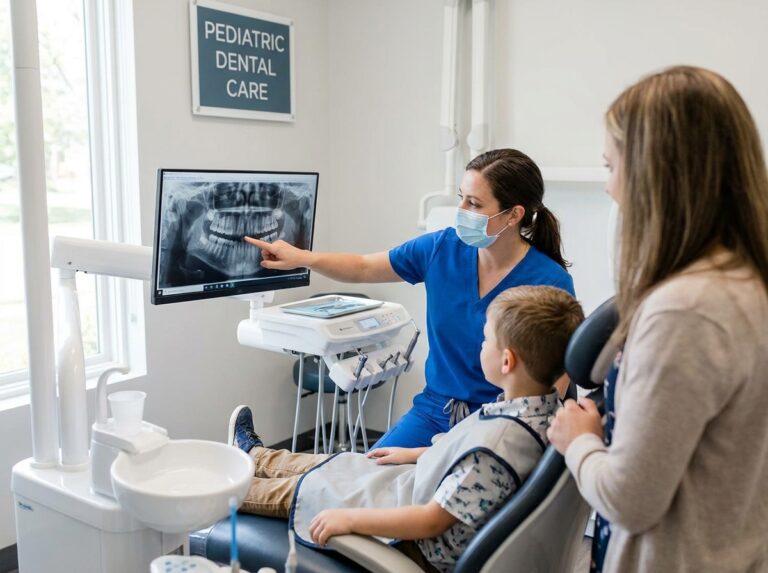
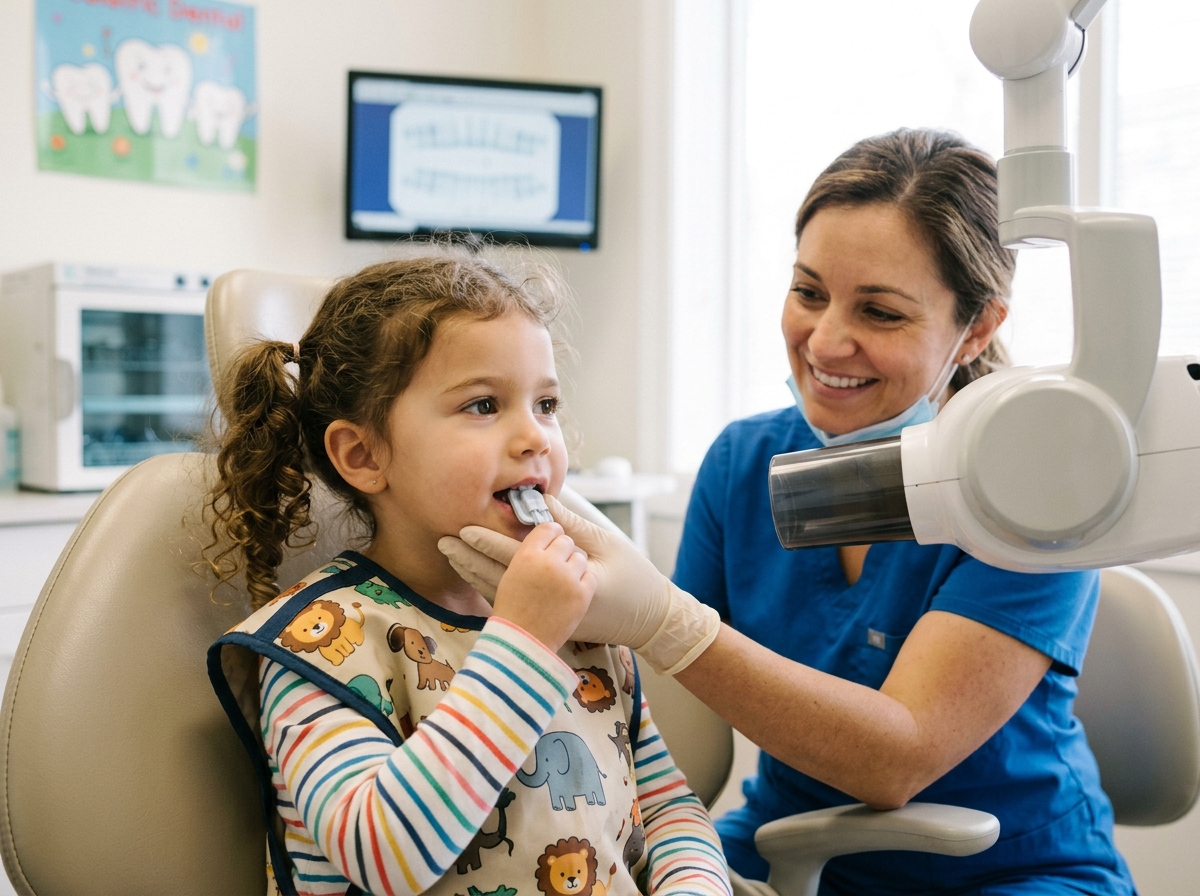
Yes, dental X-rays are worth it for most children, but timing depends on risk factors. The American Academy of Pediatric Dentistry (AAPD) recommends a child’s first dental checkup by age 1, while dental radiography—actual X-rays—typically begins between ages 2 and 6, once baby teeth start touching. Children with high cavity risk, crowded teeth, or trauma may need imaging earlier.
What You Get With Pediatric Dental X-Rays
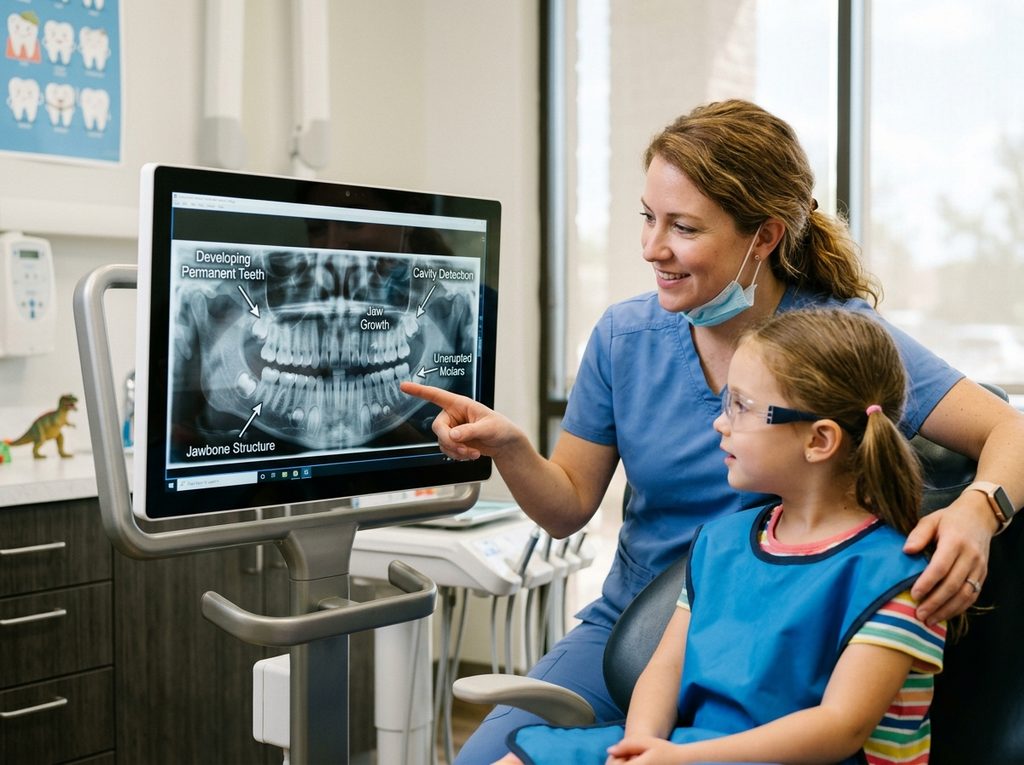
A pediatric dentist evaluates oral health using a combination of visual exams and imaging technology. Understanding what’s included versus what’s an extra cost helps parents budget accurately.
Included in Standard Pediatric Dental Care
- Visual dental checkup — free with most first visits
- Bitewing X-rays — detect cavities between back teeth, usually included after age 3-4
- Lead apron protection — standard safety equipment, no extra charge
- Digital X-ray imaging — reduces radiation exposure by up to 80% compared to film (ADA, 2023)
Extras That Cost More
- Panoramic X-ray — full jaw and tooth development view, often $75-$150
- Orthodontist referral imaging for jaw development assessment
- Fluoride treatment — typically $20-$40 per application
- Sedation for anxious toddlers during dental radiography
Cost Breakdown: Dental X-Rays for Kids
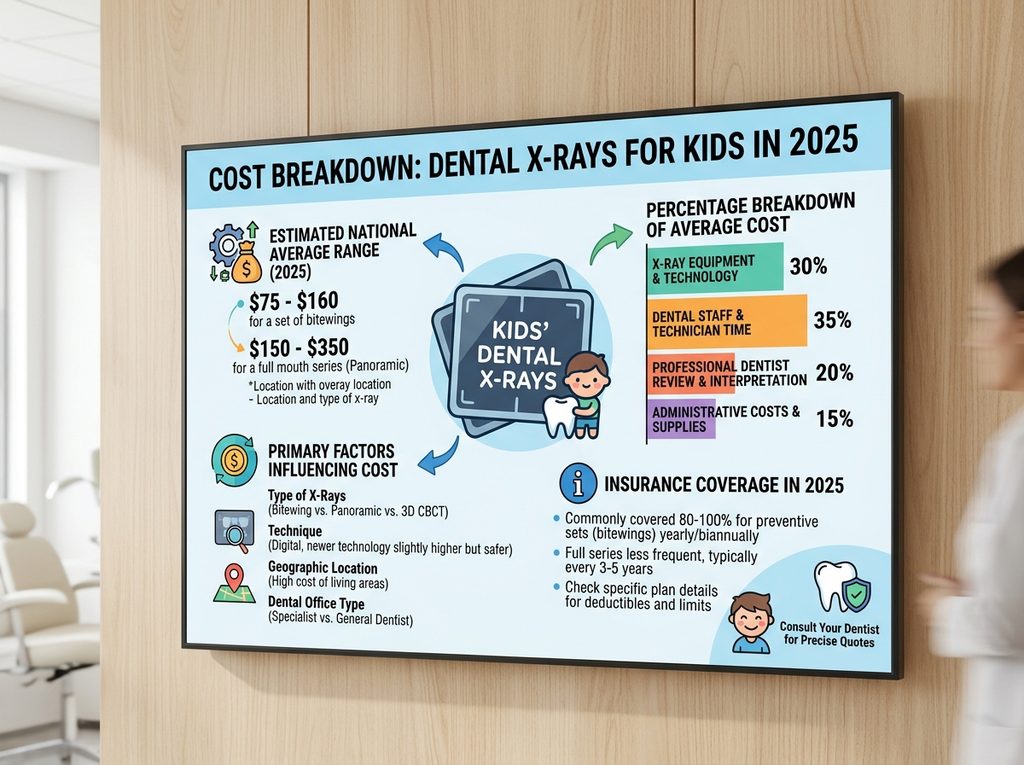
Pricing varies by region, provider, and dental insurance coverage.
| Service | Average Cost (2025) | Typical Insurance Coverage |
|---|---|---|
| First dental checkup (no X-rays) | $50-$100 | Often 100% covered |
| Bitewing X-rays (2-4 images) | $30-$75 | Usually covered annually |
| Panoramic X-ray | $75-$150 | Partial coverage, once every 2-3 years |
| Digital X-ray upgrade fee | $0-$25 | Rarely a separate charge |
Most dental insurance plans cover one set of bitewing X-rays annually for children over age 3, according to industry averages reported in 2024. Without insurance, expect to pay out-of-pocket $30-$150 depending on imaging type.
Expected Benefits & ROI Analysis
Dental X-rays deliver measurable preventive value that offsets their modest cost.
Tooth Decay Prevention
Early childhood cavities affect 23% of children ages 2-5 in the United States (CDC, 2023). Bitewing X-rays catch tooth decay between teeth that visual exams miss, often before symptoms appear.
Jaw Development and Tooth Eruption Monitoring
Panoramic X-rays track tooth eruption timeline and jaw development, identifying missing, extra, or impacted permanent teeth years before problems become visible. This early detection can reduce future orthodontic costs significantly.
Cost Comparison: Prevention vs. Treatment
A single cavity filling costs $150-$300, while treating advanced tooth decay through a root canal or extraction can exceed $1,000. Early detection via dental imaging is substantially cheaper than delayed treatment.
Who Should (and Shouldn’t) Invest in Early Dental X-Rays
Good Candidates for Early Dental X-Rays
- Children with visible tooth decay or dark spots between teeth
- Kids with a family history of cavities or crowded teeth
- Children whose teeth already touch (typically by age 2-3)
- Toddlers with dental trauma or suspected injury
- Children transitioning from baby teeth to permanent teeth (ages 6-7)
Children Who May Not Need Immediate X-Rays
- Infants and very young toddlers with well-spaced baby teeth
- Low-risk children with no visible decay and good oral hygiene for kids habits
- Children under 2 without touching teeth—visual exams suffice
According to the American Dental Association (ADA, 2024), dental X-ray necessity should be determined case-by-case, not by rigid age rules alone. A dental hygienist or pediatric dentist typically assesses individual risk during routine dental checkups.
Dental X-Ray Safety: Addressing Parent Concerns
Radiation exposure from modern digital X-ray equipment is minimal. A single bitewing X-ray delivers approximately 0.005 mSv of radiation—less than a day of natural background exposure (ADA, 2023). Lead apron shields further reduce exposure to the rest of the body.
Parents researching dental x-ray safety for kids can consult trusted providers offering child first dental x-rays guidance tailored to individual risk profiles and family dental history.
Alternatives to Consider
Not every child needs immediate imaging. Alternatives include:
- Visual-only exams — appropriate for infants and low-risk toddlers
- Fluoride treatment without imaging — strengthens enamel preventively
- Delayed imaging schedule — waiting until teeth touch, per AAPD guidance
- Increased dental visit frequency — every 3-6 months for high-risk kids without added radiation
Final Verdict: Is the First Dental X-Ray Worth It?
For most children, dental X-rays become worth it once baby teeth touch—typically ages 2 to 6. The benefits of early tooth decay prevention and jaw development monitoring outweigh the minimal radiation exposure risk when using digital X-ray technology and lead apron protection.
Children with visible decay, crowding, or trauma benefit from earlier dental radiography, while low-risk toddlers can safely wait for a standard dental exam age recommendation. Consult a pediatric dentist to build a personalized dental checkup schedule that balances prevention with safety.