What Is a Child Dental Emergency? A Broad Ripple Parent’s Guide to Urgent Care
A child dental emergency is any sudden injury or condition affecting a child’s teeth, gums, or mouth that requires prompt treatment to relieve pain, stop bleeding, or save a tooth. Common examples include a knocked-out tooth, a broken tooth, severe toothache, or a dental abscess. In Broad Ripple and greater Indianapolis, parents facing these situations should contact a pediatric dentist or emergency dentist within 30 to 60 minutes for the best outcome, according to the American Academy of Pediatric Dentistry (AAPD, 2024). Acting quickly—rather than waiting until morning or “seeing how it goes”—is the single biggest factor in whether a damaged tooth can be saved.
Why Dental Emergencies Matter for Broad Ripple Families

Children are especially prone to dental trauma from sports, playground falls, and everyday accidents. The AAPD reports that dental injuries affect up to 25% of school-age children before graduation. In a walkable, active neighborhood like Broad Ripple—home to parks, bike trails, and youth sports leagues—the risk of a child tooth injury is real and immediate. The Monon Trail, neighborhood soccer fields, and backyard trampolines are frequent locations parents report for tooth injuries in this part of Indianapolis.
Untreated dental trauma can lead to infection, permanent tooth damage, or costly oral surgery later. A minor chip left unaddressed for weeks can develop into an abscess; a knocked-out permanent tooth left out of the socket for more than an hour has a dramatically lower chance of successful reimplantation. Knowing what to do if your child has a dental emergency in Broad Ripple can mean the difference between saving a tooth and losing it permanently. This matters not just cosmetically but functionally—early tooth loss can affect speech development, chewing, and the alignment of permanent teeth still forming underneath.
Key Characteristics of a True Pediatric Dental Emergency
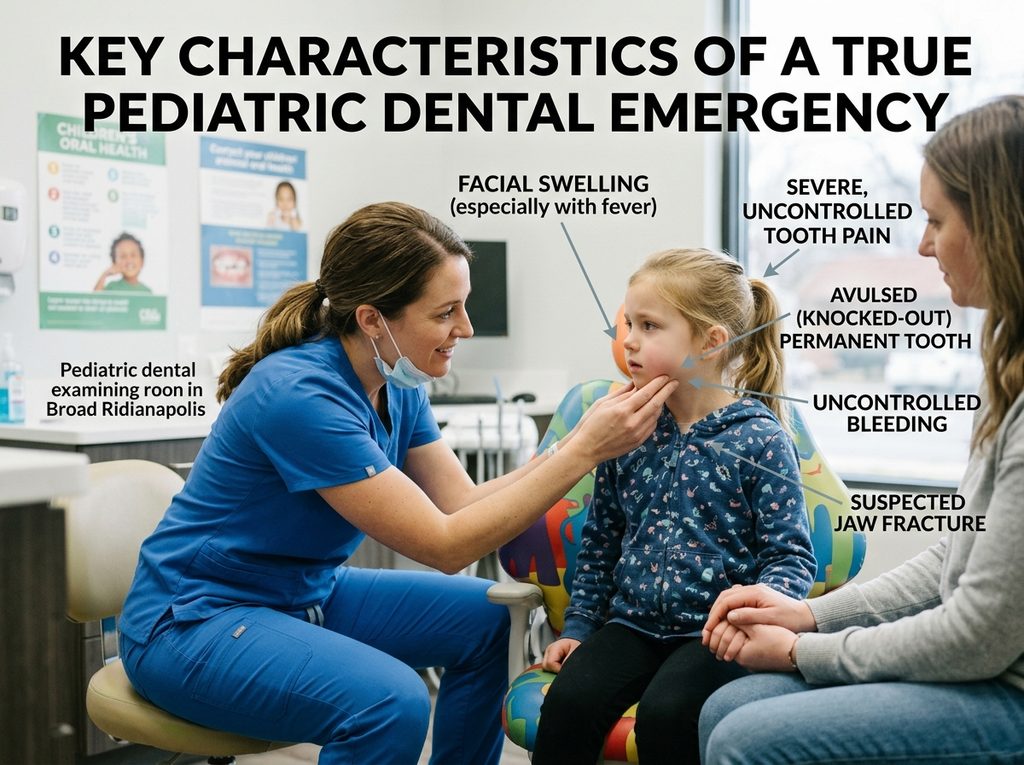
Not every dental issue requires immediate care. Recognizing these five traits helps parents distinguish a true emergency from a problem that can wait for a regular appointment.
- Uncontrolled bleeding: Bleeding from the mouth that doesn’t stop after 10 minutes of gentle, direct pressure with clean gauze.
- Visible tooth displacement: A knocked-out tooth, loosened tooth, or tooth pushed out of alignment after a fall or collision.
- Severe, persistent toothache: Pain that disrupts sleep, eating, or normal activity for more than a few hours.
- Facial swelling: Swelling near the jaw or gum line, often signaling a dental abscess or spreading infection.
- Fever with oral pain: A sign of tooth infection in a child that requires urgent evaluation, especially if fever exceeds 101°F.
If your child shows any single trait from this list, treat it as an emergency rather than waiting to see if symptoms improve. Combinations—such as swelling plus fever—signal an infection that is actively spreading and needs same-day attention.
How to Handle a Dental Emergency for Kids: Step-by-Step
1. Knocked-Out Tooth (Tooth Avulsion)
What to do if your child knocks out a tooth in Broad Ripple depends on whether it’s a baby tooth or permanent tooth.
- Locate the tooth and hold it by the crown, not the root—touching the root can damage the cells needed for reattachment.
- Rinse gently with water for no more than 10 seconds—do not scrub, use soap, or dry the tooth.
- If it’s a permanent tooth, try tooth reimplantation by placing it back in the socket if the child is old enough to cooperate and hold it in place by biting gently on gauze.
- If reimplantation isn’t possible, store the tooth in cold milk, saliva, or a specialized tooth-preservation solution—never in tap water, which can damage root cells.
- Call an emergency pediatric dentist immediately—reimplantation success drops significantly after 60 minutes (AAPD, 2024). Every additional 5 to 10 minutes of delay meaningfully reduces the odds of a successful outcome.
Note: Baby teeth are generally not reimplanted, since doing so can damage the developing permanent tooth underneath. Still call your pediatric dentist to check for fragments or injury to the surrounding gum and bone.
2. Broken or Chipped Tooth
First aid for a child’s broken tooth at home includes these steps:
- Rinse the mouth with warm water to clear debris and assess the injury.
- Apply a cold compress to the cheek or lip near the injury to reduce swelling for 15-20 minutes at a time.
- Save any broken tooth fragments in milk or water in case they can be bonded back.
- Cover any sharp edges with dental wax or sugar-free gum if the child complains of a cutting sensation on the tongue or cheek.
- See an emergency dentist within 24 hours, especially for a chipped tooth treatment after sports injury tooth trauma, to check for nerve exposure.
3. Severe Toothache
Steps to take when a child has a toothache at night:
- Rinse the mouth with warm salt water (about 1/2 teaspoon salt per 8 ounces of warm water).
- Use dental floss to remove trapped food that may be causing pressure or irritation.
- Apply a cold compress externally for tooth pain relief for kids, holding it against the outside of the cheek.
- Avoid placing aspirin directly on the gum—this can burn tissue and cause chemical damage.
- Give an age-appropriate dose of children’s acetaminophen or ibuprofen if approved by your pediatrician.
- Contact an after-hours dentist if pain persists past a few hours or worsens overnight.
4. Dental Abscess or Tooth Infection
A dental abscess is a pocket of infection that can cause facial swelling, fever, and a visible pimple-like bump on the gum. This condition requires urgent dental care for kids, not home treatment alone. Warm salt-water rinses can offer temporary comfort, but they do not resolve the underlying infection. Left untreated, infection can spread to the jaw, neck, or bloodstream—a medical emergency known as cellulitis or, in rare severe cases, sepsis.
Building a Dental Emergency Kit for Home and Travel
A basic dental emergency kit prepares parents for child dental trauma before it happens, whether at home, at a Broad Ripple park, or on a family trip. Include:
- Small container with a tight-fitting lid (for a knocked-out tooth or broken fragment)
- Clean gauze pads for controlling bleeding
- Cold compress or reusable ice pack
- Small carton of milk or saline solution for tooth storage (keep a travel-size option in a cooler bag for games and practices)
- Children’s pain reliever, dosed by weight per your pediatrician’s guidance
- Dental wax to cover sharp edges of a chipped tooth
- Contact number for your pediatric dentist’s emergency hotline, saved in your phone and written on a card in the kit
Consider keeping a duplicate mini-kit in your car or sports bag, since many injuries happen away from home during practices or games.
Common Misconceptions About Child Dental Emergencies
Myth: Baby teeth injuries don’t matter since they’ll fall out anyway.
Reality: Baby teeth guide permanent teeth into proper position. Trauma to baby teeth can damage the developing permanent tooth underneath, according to children’s dentistry research from the AAPD. Even a seemingly minor bump can affect enamel formation on the permanent tooth still forming in the jaw.
Myth: You should always go to the ER for a knocked-out tooth.
Reality: A pediatric dentist or emergency dentist is typically better equipped for tooth reimplantation and dental trauma than a general ER. When to visit the ER versus a dentist for a child tooth injury depends on whether there’s a risk of concussion, jaw fracture, or uncontrolled bleeding—these require ER care first, followed by a dental evaluation.
Myth: Toothaches always resolve on their own.
Reality: Persistent tooth pain often signals decay or infection that worsens without treatment from a dental clinic. Pain that comes and goes for more than a day or two usually indicates a problem that will not self-correct without professional care.
Myth: A little tooth wiggle after a bump is always harmless.
Reality: Mild looseness can resolve on its own, but a dentist should confirm there’s no root fracture or nerve damage, since some injuries look minor externally but affect the tooth’s internal structure.
Emergency Dentist vs. Regular Family Dentist vs. ER
| Care Type | Best For | Typical Availability |
|---|---|---|
| Emergency Pediatric Dentist | Knocked-out tooth, broken tooth, dental abscess, severe toothache | Same-day, weekend dentist availability, some 24 hour emergency dentist for kids options |
| Family Dentist Broad Ripple | Routine checkups, minor chips, follow-up dental x-ray review | Scheduled appointments, limited urgent care slots |
| Hospital ER / Urgent Care | Jaw fractures, head trauma, uncontrolled bleeding | 24/7, but limited pediatric oral surgery expertise |
In practice, many Broad Ripple families use a two-step approach: the ER (or urgent care) first for any head injury or bleeding that won’t stop, then a same-day or next-day follow-up with a pediatric dentist for tooth-specific care such as splinting, bonding, or extraction.
Practical Applications: Common Scenarios in Broad Ripple
What to Do If Your Child Chips a Tooth Playing Sports
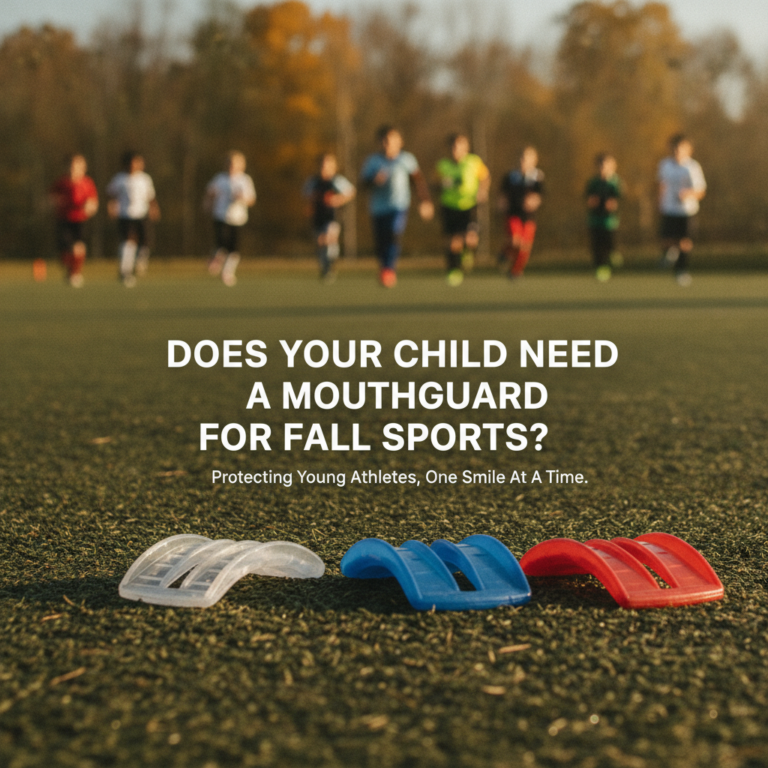
Broad Ripple’s active youth sports scene means chipped teeth from soccer, basketball, or biking are common. Rinse the mouth, save any fragments, apply a cold compress, and seek chipped tooth treatment within 24 hours to determine if a dental crown or bonding is needed. Mouthguards for organized sports significantly reduce the risk of these injuries and are worth discussing with your child’s dentist before the season starts.
Handling a Dental Emergency at Night or on Weekends
Toothaches and injuries rarely happen during regular office hours. If your child has a toothache at night in Broad Ripple, start with home first aid—salt water rinse, cold compress, appropriate pain reliever—then call your pediatric dentist’s emergency line for guidance on whether an in-person visit is needed before morning. Ask your family dentist in advance whether they offer weekend dentist availability or a 24-hour emergency line, so you already have a plan before an emergency happens.
Finding an Emergency Pediatric Dentist Near Broad Ripple Indianapolis
When searching for a kids emergency dentist near me, prioritize clinics offering same-day scheduling, dental x-ray capability on-site, and staff experienced in children’s oral health. For families seeking a trusted pediatric dental emergency Indianapolis provider, look for a practice with an emergency dental hotline and weekend dentist availability.
Affordable Emergency Dental Care for Children in Broad Ripple
Many pediatric dental clinics offer payment plans or accept insurance for urgent visits. Ask about cost estimates for dental splint placement, tooth reimplantation, or emergency dental services before your appointment when possible. Some practices also offer sliding-scale fees or work with dental discount plans for families without insurance coverage.
Signs Your Child Needs Emergency Dental Care Right Now
- Tooth completely knocked out
- Visible fracture exposing the tooth’s inner layer (often appears pink or red at the center)
- Swelling that affects breathing or swallowing
- Fever combined with facial or gum swelling
- Bleeding that won’t stop after 10 minutes of direct pressure
Key Takeaways
A child dental emergency requires fast, clear action: assess the injury, apply first aid, and contact an emergency pediatric dentist immediately. Whether it’s a knocked-out tooth, broken tooth, or dental abscess, Broad Ripple families have access to urgent pediatric dental care designed specifically for children’s needs. Having a dental emergency kit ready and knowing which provider to call can protect your child’s baby teeth or permanent teeth and prevent long-term complications. The best outcomes come from preparation: save the emergency contact number now, keep a basic kit at home and in your sports bag, and act within the first hour whenever a tooth is knocked loose or knocked out entirely.