
Is Indiana Medicaid Pediatric Dental Coverage Worth It?
Yes, Indiana Medicaid pediatric dental coverage is worth it for eligible families because it provides $0 to low-cost preventive, restorative, and emergency dental care for children through age 18. Indiana Medicaid delivers these benefits through Hoosier Healthwise and the Healthy Indiana Plan (HIP), administered by the Indiana Family and Social Services Administration (FSSA). If your household meets Indiana Medicaid eligibility requirements, this coverage typically outperforms private insurance on cost while matching or exceeding it on preventive dental care access. For a family with two children needing routine checkups, sealants, and an occasional filling, Indiana Medicaid can save $500–$1,200 per year compared to out-of-pocket private dental costs.
What You Get: Covered Services vs. Exclusions
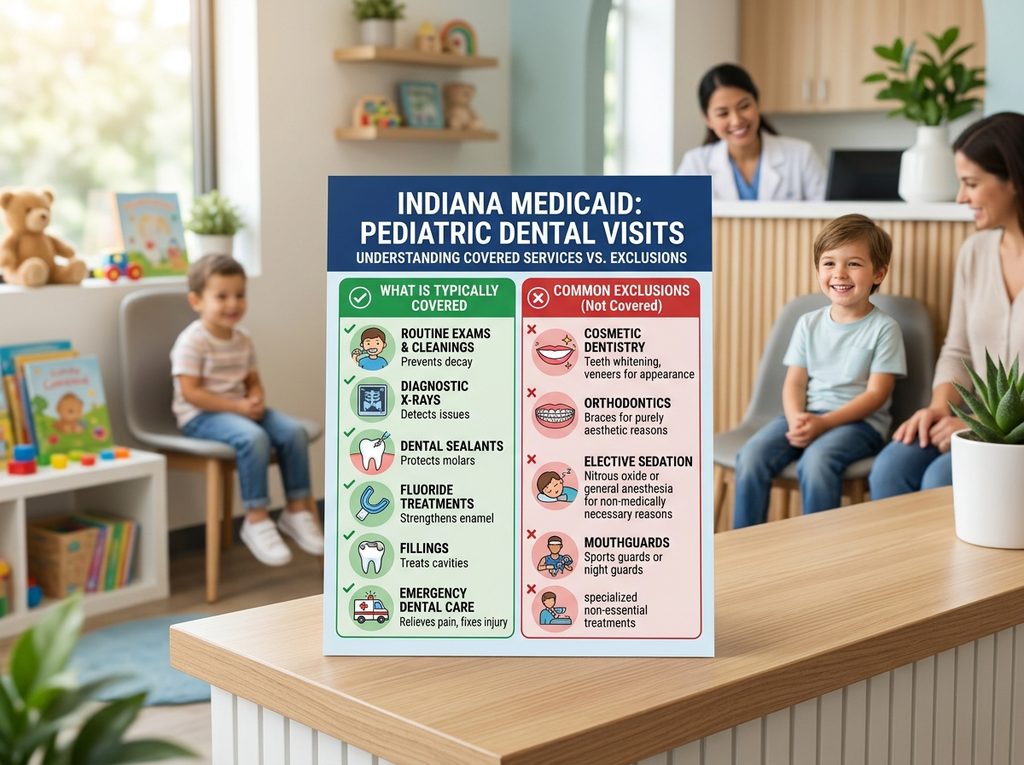
Indiana Health Coverage Programs (IHCP) require Medicaid Managed Care Organizations (MCOs)—including Anthem Indiana, MHS Indiana, and CareSource Indiana—to provide comprehensive pediatric dental benefits under the Early and Periodic Screening, Diagnostic, and Treatment (EPSDT) mandate. EPSDT is a federal Medicaid requirement that guarantees children under 21 access to medically necessary dental, vision, and hearing services, regardless of whether those services are listed in the state’s standard adult Medicaid plan.
Included Services
- Dental exams Medicaid children can access twice per year (Medicaid annual dental visit minimum is one, but most plans allow two)
- Dental checkups Medicaid covers, including routine cleanings
- Dental x-rays Medicaid authorizes when clinically necessary, typically bitewing films every 6–12 months
- Dental sealants on permanent molars to prevent decay, usually applied between ages 6 and 14
- Fluoride treatment during preventive visits, recommended twice yearly for cavity-prone children
- Tooth extraction Medicaid coverage for decayed or infected teeth
- Fillings and crowns for cavities in children, including stainless steel crowns for badly decayed primary molars
- Emergency dental care Medicaid Indiana covers for trauma or acute infection, including after-hours urgent visits at participating clinics
- Space maintainers when a primary tooth is lost early, to preserve alignment for permanent teeth
Indiana Medicaid Dental Exclusions
- Cosmetic procedures such as teeth whitening
- Orthodontics Medicaid Indiana approves only when medically necessary (severe malocclusion documented via a Handicapping Labio-lingual Deviation score), not for cosmetic alignment
- Elective third molar (wisdom tooth) removal without symptoms
- Experimental or investigational dental technologies not yet recognized by the ADA
Because coverage rules and network dentists change, families should confirm services directly with their MCO or a provider like Indiana Medicaid pediatric dental specialists before scheduling non-emergency treatment. Prior authorization is often required for crowns, orthodontics, and certain oral surgery procedures, so ask your dentist’s office to verify approval status before your child’s appointment.
Cost Breakdown: Premiums, Copays, and Eligibility
According to the Indiana FSSA (2025), pediatric dental coverage costs vary by program:
| Program | Monthly Premium | Dental Copay | Income Eligibility (2025) |
|---|---|---|---|
| Hoosier Healthwise | $0 | $0 | Up to 255% Federal Poverty Level (FPL) |
| Healthy Indiana Plan (HIP) | $1–$20 (POWER account) | $0 for children | Up to 138% FPL for adults; children route to Hoosier Healthwise |
| CHIP (via Hoosier Healthwise) | $0–$70/family | $0–$3 | Children in families above Medicaid limit, under 250% FPL |
To translate these percentages into real numbers, 255% FPL for a family of four was approximately $79,500 in annual income for 2025, per FSSA guidance. A single parent with two children earning around $52,000 per year would likely qualify for Hoosier Healthwise at no cost. Private children’s dental insurance in Indiana averages $15–$40 per month per child, per a 2024 National Association of Dental Plans estimate—meaning a two-child household could pay $360–$960 annually for private coverage versus $0 under Hoosier Healthwise. This makes Indiana Medicaid dental coverage significantly cheaper for qualifying low-income families.
Indiana Medicaid Application Process
- Apply online via the FSSA Benefits Portal, by phone, or in person at a local Division of Family Resources office
- Provide income, household size, and residency documentation, such as recent pay stubs or a tax return
- Receive plan assignment (Hoosier Healthwise or HIP), typically within 45 days per federal Medicaid processing rules
- Select or get auto-assigned an MCO: Anthem Indiana, MHS Indiana, or CareSource Indiana
- Locate a Medicaid dental provider through the MCO directory or by calling member services
- Schedule an initial exam within the first 90 days of enrollment to establish a dental home for your child
Most families receive a decision letter and member ID card within 2–4 weeks of a completed application, according to FSSA processing benchmarks. Renewal happens annually, and missing a renewal deadline is one of the most common reasons children lose dental coverage unexpectedly.
Expected Benefits & ROI Analysis
The American Dental Association (ADA, 2023) reports that untreated childhood cavities cost families an average of $1,000+ more when they progress to emergency extractions versus early fillings. Indiana Medicaid preventive dental care—covering two exams, cleanings, and fluoride annually—reduces this risk substantially.
Return on investment centers on prevention: a $0 preventive visit can eliminate a $500–$1,500 emergency room dental visit later. For example, a routine sealant application costing Medicaid roughly $30–$50 per tooth can prevent a molar cavity that would otherwise require a $150–$300 filling or a $600+ crown if neglected. The Centers for Medicare and Medicaid Services (CMS, 2024) notes that states with strong EPSDT dental utilization see fewer pediatric emergency department visits for dental pain, which also reduces missed school days for children and missed workdays for parents.
How Often Does Medicaid Cover Dental Visits for Kids in Indiana?
Indiana Medicaid covers dental checkups every six months for most children, aligning with ADA-recommended intervals. This twice-yearly cadence supports early detection of cavities in children before costly intervention is needed. Children with higher caries risk—identified through a dentist’s risk assessment—may qualify for additional fluoride treatments or more frequent monitoring visits.
Does Indiana Medicaid Cover Pediatric Dental Cleanings?
Yes, routine cleanings are a core covered preventive service under Hoosier Healthwise and HIP-linked children’s coverage, with no copay for most enrollees. Cleanings typically include plaque and tartar removal, polishing, and an oral health assessment by a licensed hygienist or dentist.
Who Should Enroll — and Who Shouldn’t
Good Fit
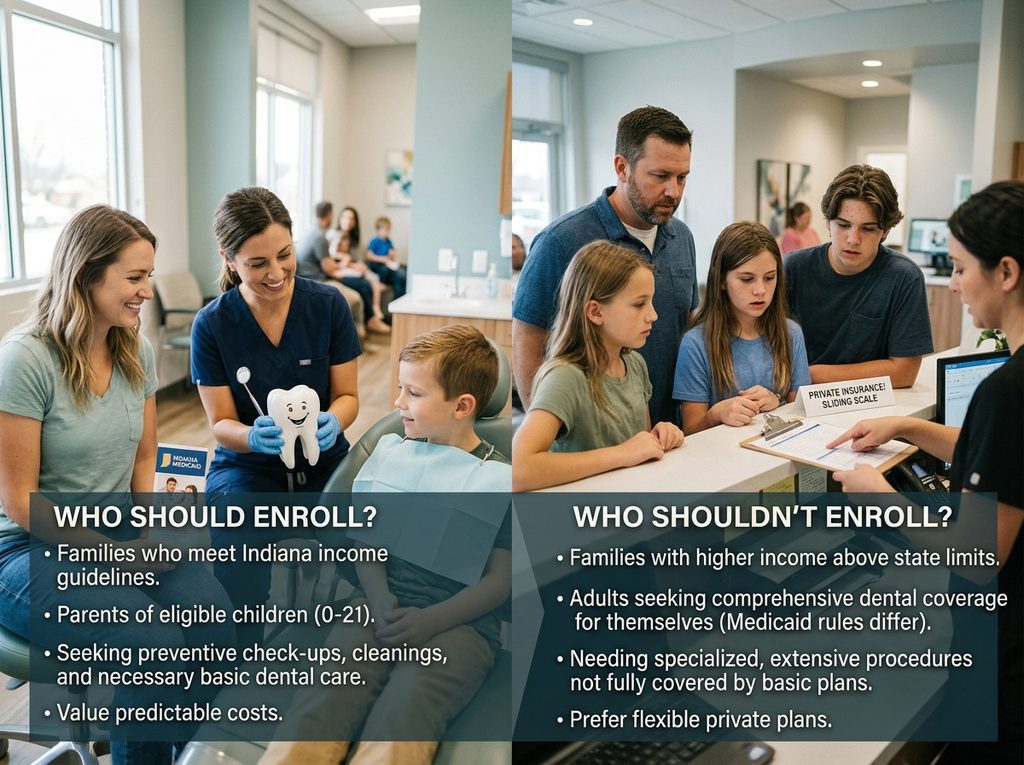
- Families meeting Indiana Medicaid eligibility income thresholds
- Parents seeking free dental care for children with no dental insurance
- Households needing coverage for cavities, extractions, or sealants
- Families near the Medicaid dental provider network in their county
- Parents of children with special healthcare needs requiring frequent dental monitoring
Not a Fit
- Families above income limits who don’t qualify for Hoosier Healthwise or CHIP
- Parents seeking purely cosmetic orthodontics not deemed medically necessary
- Households wanting unrestricted choice of out-of-network specialists
- Families in rural counties with limited Medicaid dental provider participation, where wait times can exceed 4–6 weeks
Indiana Medicaid Pediatric Dental Coverage Age Limit
Indiana Medicaid dental benefits generally continue through age 18, after which enrollees transition to adult Medicaid dental coverage, which offers more limited benefits under Indiana law. Adult Medicaid dental in Indiana typically covers exams, extractions, and limited restorative work, but excludes many services like crowns and comprehensive orthodontics that were available under pediatric coverage.
Alternatives to Consider
- CHIP-only enrollment: For families slightly over Medicaid limits but under 250% FPL, with modest premiums of $0–$70 per family per month
- Private children’s dental insurance: $15–$40/month, useful if ineligible for Medicaid, though many plans include 6–12 month waiting periods for major services
- Dental school clinics: Reduced-fee care supervised by licensed faculty, such as those affiliated with Indiana University School of Dentistry, often 30–50% below private market rates
- Sliding-scale community health centers: Income-based fees for uninsured families, sometimes as low as $20–$50 per visit
- Employer-sponsored dental plans: May cost less than Medicaid spend-down options in HIP, particularly for families near the income cutoff
Does Healthy Indiana Plan Cover Children’s Dental Care?
HIP itself covers adults; children in HIP households are typically enrolled in Hoosier Healthwise, which covers pediatric dental benefits directly. This means a single household may have parents on HIP and children on Hoosier Healthwise simultaneously, each with different premium and copay structures.
Does Hoosier Healthwise Cover Dental for Children?
Yes, Hoosier Healthwise is the primary Indiana Medicaid pathway providing children’s oral health coverage, including exams, x-rays, fillings, and emergencies. Coverage begins immediately upon enrollment confirmation, with no waiting period for preventive services.
Final Verdict: Is It Worth It?
Indiana Medicaid dental coverage is worth it for eligible families because it eliminates cost barriers to preventive and restorative pediatric dental services. With $0 premiums for most Hoosier Healthwise enrollees and no dental copay for children, the coverage lowers financial risk while meeting ADA-recommended checkup frequency. Compared to private insurance, which often carries monthly premiums plus annual deductibles of $50–$100, Indiana Medicaid removes nearly all cost friction for qualifying households.
Bottom line: If your child qualifies under Indiana Medicaid eligibility rules, enroll and use the benefit—the ROI on prevention alone justifies the paperwork. If you exceed income limits, CHIP or low-cost private plans are the next-best alternative, and dental school clinics remain a viable backup for occasional restorative needs.