What Should You Do If Your Child Chips or Knocks Out a Tooth? Emergency Dental Trauma Protocol for Parents
A dental emergency involving a chipped or knocked-out tooth is any traumatic injury to a child’s tooth structure requiring immediate assessment and intervention to preserve tooth viability, prevent infection, and minimize long-term complications. According to the American Academy of Pediatric Dentistry (2024), dental trauma affects 25-30% of children before age 18, making it one of the most common pediatric emergencies.
Why Immediate Response to Tooth Trauma Matters
The first 30-60 minutes after a knocked out tooth child incident determine whether a permanent tooth can be successfully saved. The periodontal ligament surrounding the tooth root contains cells that remain viable for only 60 minutes outside the tooth socket when properly stored. For a chipped tooth emergency, immediate care prevents tooth infection injury, reduces tooth pain injury, and protects the exposed dental pulp from bacterial contamination.
Dental trauma in children falls into two primary categories: tooth fracture (chipped, cracked, or broken tooth) and tooth avulsion (completely knocked out tooth). Each requires distinct emergency tooth care protocols based on whether the injury involves a baby tooth or permanent tooth.
Immediate First Aid Steps for Knocked Out Tooth at Home
When a child experiences dental avulsion, follow these critical tooth avulsion management steps immediately:
- Locate the tooth and all tooth fragments – Search the accident area thoroughly. If the tooth was swallowed or inhaled, seek medical attention at a children’s hospital.
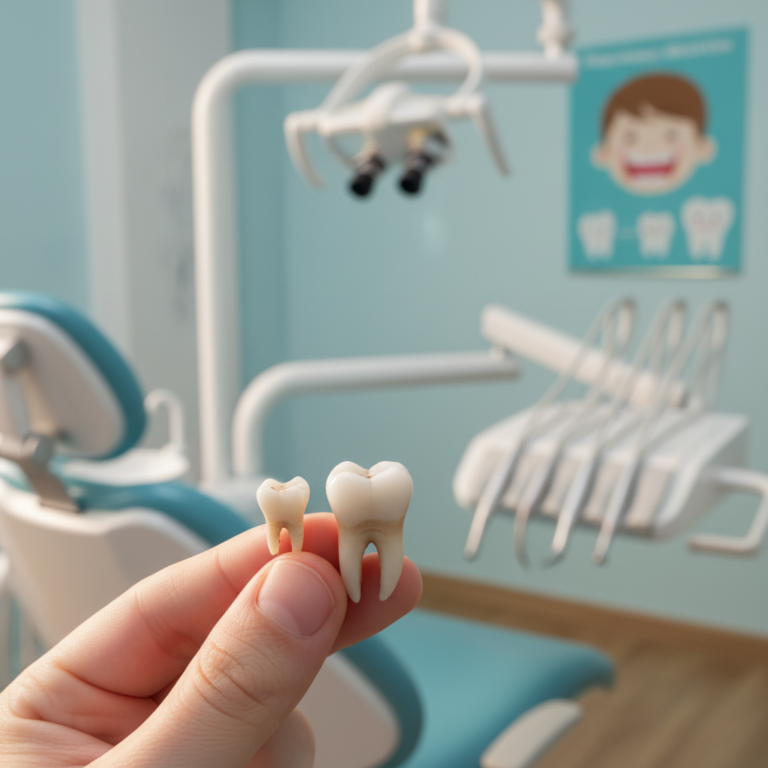
- Handle the tooth by the crown, never the root – Touching the tooth root damages the periodontal ligament cells essential for successful tooth reimplantation.
- Determine if it’s a baby tooth or permanent tooth – Never attempt to replant a primary tooth (milk tooth knocked out), as this can damage the developing adult tooth underneath. Only permanent teeth should be replanted.
- Gently rinse debris with saline solution – If the permanent tooth is dirty, hold it by the crown and rinse briefly (10 seconds maximum) with sterile saline solution or cold water. Do not scrub or use soap.
- Replant the tooth immediately if possible – For children over age 7 with a knocked out permanent tooth, carefully push the tooth back into the tooth socket. Have the child bite down gently on a clean gauze pad to hold it in place.
- Store properly if reimplantation isn’t possible – Place the tooth in Hank’s Balanced Salt Solution (available in emergency dental kits), cold milk, or saline solution. Never use tap water, which damages cells.
- Control bleeding with gauze and cold compress – Apply a clean gauze pad to the alveolar bone area and use an ice pack on the face to reduce swelling and tooth socket bleeding.
- Contact an emergency dentist or pediatric dentist within 30 minutes – Time is critical for tooth preservation. Many practices offer after-hours dentist services for dental trauma.
Chipped Tooth Treatment Protocol for Children
A chipped tooth emergency requires different management than complete avulsion. The broken tooth treatment approach depends on the fracture severity:
Enamel Fracture (Minor Chips)
An enamel fracture affects only the tooth’s outer white layer. While not always painful, this fractured tooth child scenario requires dental bonding or composite resin repair to prevent tooth sensitivity injury and protect the underlying dentin. Schedule an appointment with a pediatric dentist within 24-48 hours. Until then, apply a cold compress to reduce mouth injury child swelling and avoid hard or sticky foods to avoid eating with chipped tooth.
Crown Fracture (Moderate Chips)
A crown fracture extends into the dentin layer, often causing tooth pain injury and sensitivity. The child may experience sharp edges that irritate the tongue or cheek. Save any tooth fragment recovery pieces in milk or saline solution. Contact an emergency dentist child specialist within 6-12 hours. The dentist may apply dental cement as a temporary measure or perform dental bonding for permanent restoration.
Tooth Fracture Exposing Pulp (Severe)
When a broken front tooth or back tooth chipped injury exposes the pink dental pulp (nerve), immediate emergency dental care is required. This oral trauma pediatric emergency may require root canal therapy, a dental crown, or extraction depending on the damage extent. Apply a cold, wet gauze pad to the area and seek care within 1-2 hours. An endodontist or oral surgeon may be consulted for complex cases.
How to Save a Knocked Out Baby Tooth vs Permanent Tooth
Understanding the difference between primary tooth injury and permanent tooth damage is crucial for appropriate dental trauma care:
Baby Tooth (Primary Tooth) Avulsion
According to trauma protocol guidelines, a knocked tooth baby should never be replanted. Attempting to save baby tooth through reimplantation risks damaging the permanent tooth developing beneath it or causing tooth intrusion (the baby tooth being pushed into the developing permanent tooth). Instead:
- Control bleeding with clean gauze
- Apply ice pack to reduce swelling
- Schedule a pediatric dentist appointment within 24 hours
- Discuss whether a space maintainer is needed to prevent adjacent teeth from shifting
Permanent Tooth (Adult Tooth) Avulsion
A knocked out tooth child involving a permanent tooth constitutes a true dental emergency requiring immediate action. The tooth preservation medium and rapid response determine success. Research shows that permanent teeth replanted within 30 minutes have an 85-97% success rate, dropping to 25-50% after 60 minutes.
For detailed guidance on child knocked-out tooth what to do, consult with a pediatric emergency specialist who can assess tooth root damage and determine if dental splinting is necessary to stabilize the replanted tooth.
When to Visit the Emergency Dental Care Provider or ER
Seek immediate care at an emergency dentist, children’s hospital, or dental emergency room if:
- A permanent tooth is knocked out (within 30 minutes)
- Severe tooth socket bleeding that doesn’t stop after 10 minutes of pressure
- Signs of tooth nerve damage including extreme sensitivity or numbness
- Tooth displacement where the tooth is pushed sideways or into the gum (tooth luxation or tooth intrusion)
- Multiple teeth affected by facial injury or sports injury teeth trauma
- Suspected root fracture or alveolar bone damage
- Signs of tooth infection injury including fever, swollen gum tooth injury, or pus
- Tooth fragment swallowed or inhaled
For less severe situations like minor enamel fracture or loose tooth injury, schedule an urgent dental care appointment within 24 hours.
Common Myths About Dental Injury Children
Myth: You should put a knocked out baby tooth back in the socket.
Reality: Never replant a primary tooth. This can damage the developing permanent tooth underneath.
Myth: Tap water is fine for storing a knocked out tooth.
Reality: Tap water destroys periodontal ligament cells. Use Hank’s Balanced Salt Solution, milk, or saline solution only.
Myth: A chipped baby tooth doesn’t need treatment.
Reality: Even minor chips can lead to tooth discoloration trauma, infection, or problems with the developing permanent tooth.
Myth: You have several hours to see a dentist for a knocked out tooth.
Reality: The 30-60 minute window is critical. How long can a knocked out tooth survive depends on storage conditions, but immediate care maximizes success.
Preventing Dental Trauma: Protection Strategies
Prevention is the most effective dental trauma management approach. According to the American Academy of Pediatric Dentistry (2025), proper mouth guard children use reduces sports injury teeth by 60-80%:
- Custom sports guard – A pediatric dentist can create a properly fitted mouth guard for contact sports, skateboarding, and bicycle riding
- Dental sealant application – Protects vulnerable molars from fracture during falls or playground accident incidents
- Childproofing home environments – Secure furniture, pad sharp corners, and use safety gates to prevent fall injury tooth trauma
- Supervision during high-risk activities – Monitor children during contact sports injury situations, bicycle accident dental risks, and playground play
- Emergency dental kit preparation – Keep Hank’s Balanced Salt Solution, gauze pads, and emergency dentist contact information accessible
What to Expect During Emergency Dental Treatment
When you arrive for emergency dental visit care, the pediatric dentist or endodontist will:
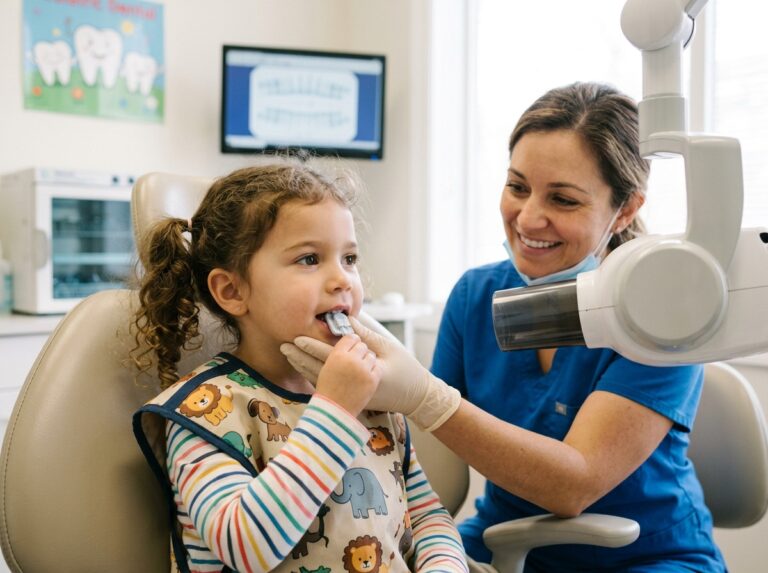
- Conduct a dental radiograph (X-ray) to assess tooth root damage, root fracture, and alveolar bone injury
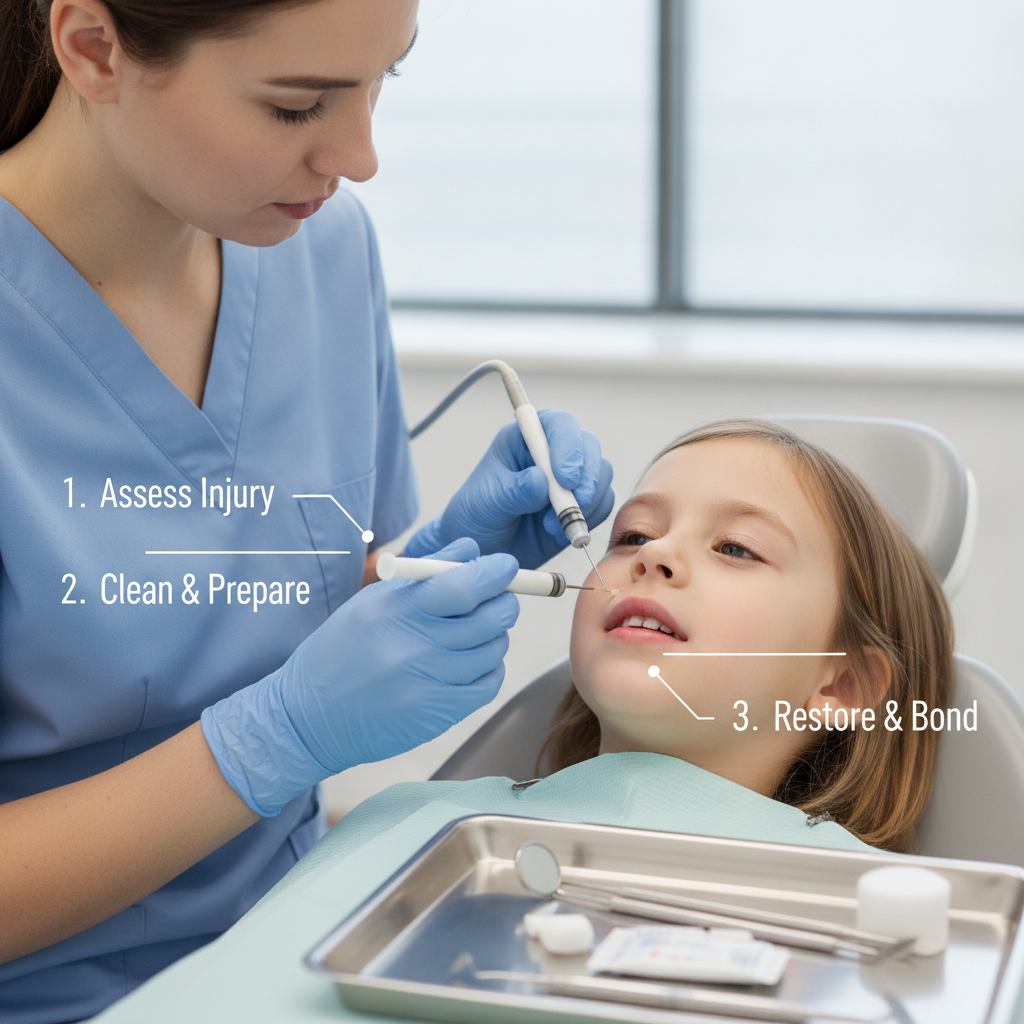
- Clean and disinfect the affected area
- For reimplanted teeth, perform dental splinting using composite resin and wire to stabilize the tooth for 7-14 days
- Prescribe antibiotics to prevent tooth infection injury
- Verify tetanus shot status if facial injury involved contaminated surfaces
- Schedule follow-up appointments to monitor healing and check for tooth mobility trauma or tooth discoloration trauma
Dental insurance typically covers emergency tooth care, though coverage varies by plan. Contact your provider to understand benefits for oral trauma pediatric treatment.
Long-Term Considerations After Tooth Injury Treatment
Following tooth trauma first aid and professional care, monitor for complications including tooth sensitivity injury, tooth turning gray or black (indicating pulp death requiring root canal therapy), or loose tooth injury progression. Some children may eventually need a veneer, dental crown, or implant depending on how the tooth heals. For extensive damage affecting bite alignment, orthodontic treatment may be recommended.
Understanding what to do if child chips front tooth or experiences complete dental avulsion empowers parents to respond effectively during these stressful dental accident response situations, maximizing the chance of saving the tooth and minimizing long-term complications.