How to Help an Anxious Child Feel Comfortable at the Dentist: 8-Step Guide
Helping an anxious child feel comfortable at the dentist requires preparation, patience, and proven behavioral management techniques. According to the American Academy of Pediatric Dentistry (2024), 20% of children experience dental anxiety, which can lead to avoidance of necessary preventive care. This comprehensive guide provides 8 actionable steps to reduce dental fear in children, typically achieving positive results within 2-3 weeks of consistent preparation.
Difficulty Level: Beginner to Intermediate | Time Required: 2-3 weeks of preparation, plus 45-60 minutes per dental appointment | Age Range: 2-12 years
Before You Begin: Essential Prerequisites

What You’ll Need:
- Comfort items (stuffed animal, favorite blanket, or small toy)
- Scheduled appointment with a pediatric dentist (preferably morning slot when child is well-rested)
- List of any anxiety triggers or sensory sensitivities your child has
- Previous dental records (if applicable) documenting any dental trauma or negative experience
- Prepared explanations using age-appropriate dental communication
- Reward system materials (sticker chart or small prize options)
Important Considerations: Children with autism spectrum disorder or diagnosed anxiety disorder may require specialized approaches through special needs dentistry providers. If your child has experienced previous negative dental experiences, allow 4-6 weeks for desensitization before scheduling a procedure beyond a simple dental checkup.
Step 1: Select a Child-Friendly Dental Practice
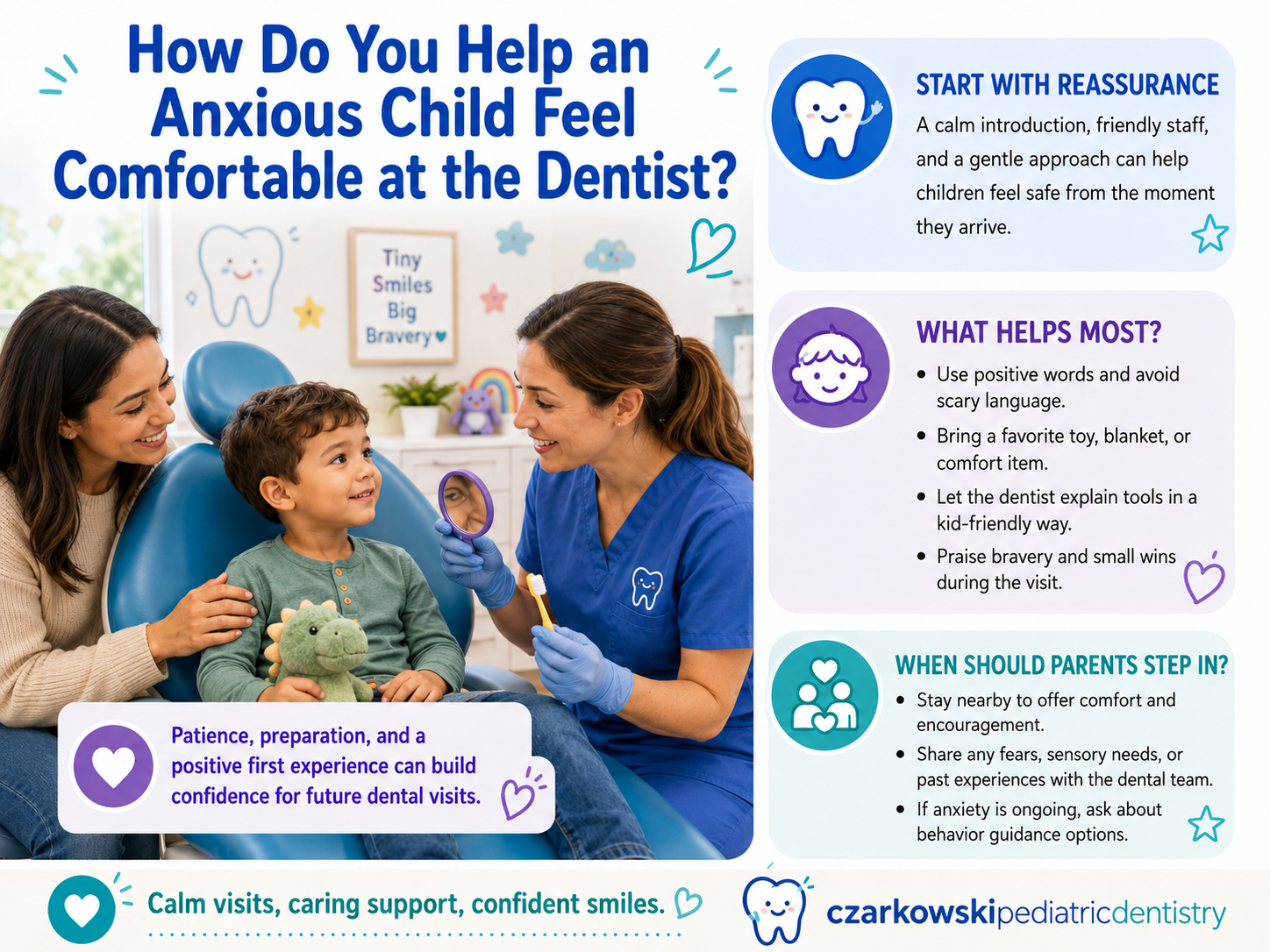
Choose a pediatric dentist specifically trained in behavioral dental techniques and child dental psychology. A kid-friendly dental practice features a child-friendly environment with colorful waiting rooms, age-appropriate entertainment, and staff experienced in pediatric dental behavior guidance.
Action Items:
- Research practices offering fear-free dentistry for children and specialized pediatric patient comfort measures
- Schedule a pre-visit tour to familiarize your child with the dental office layout and meet the dental team
- Ask about available sedation dentistry options, including nitrous oxide (laughing gas) for anxious patients
- Verify the practice’s experience with nervous pediatric patients and their comfort strategies pediatric dentistry
According to a 2023 study in Pediatric Dentistry Journal, children who visit offices designed with therapeutic dental approaches show 40% lower dental anxiety symptoms compared to traditional settings. Practices like Czarkowski Pediatric Dentistry specialize in creating supportive dental environments specifically designed to reduce stress dental visit experiences for young patients.
Step 2: Prepare Your Child at Home Using Positive Language
Dental visit preparation for children should begin 7-10 days before the appointment to reduce dental fear in children without overwhelming them. Use positive dental association language that avoids scary words like “pain,” “hurt,” or “shot.”
Recommended Approach:
- Read age-appropriate books about dental visits that normalize the experience
- Explain that the dental hygienist will “count and clean” their teeth to keep them healthy
- Avoid mentioning dental drill sounds or potentially frightening dental tools in advance
- Focus on the prize box or reward system the dental office offers afterward
- Never use the dentist as a threat for poor oral health habits
Sample Script for Ages 3-6: “Tomorrow we’re visiting Dr. [Name], who helps keep teeth strong and sparkly! They have special chairs that go up and down, and you’ll get to pick a prize when we’re done. I’ll be right there with you the whole time.”
Sample Script for Ages 7-12: “The dentist will check your teeth to make sure they’re healthy. They’ll use a little mirror and a counter to check each tooth. It might feel ticklish when they clean them, but it doesn’t hurt. You can raise your hand if you need a break.”
Step 3: Practice Relaxation Techniques and Desensitization at Home
Implement calming techniques pediatric dentistry professionals recommend through role-play and guided imagery. This reduces dental stress management needs during the actual appointment.
Practice Activities (15 minutes daily for 5-7 days before appointment):
- Breathing exercises: Practice “smell the flower, blow out the candle” breathing (inhale for 4 counts, exhale for 6 counts)
- Tell-show-do technique: Use a toothbrush to “count” a doll’s or stuffed animal’s teeth, mimicking what the dentist will do
- Visualization: Have your child close their eyes and imagine sitting in the dental chair feeling calm and brave
- Music therapy preparation: Let them practice wearing headphones with favorite music to use during the dental cleaning
- Dental chair simulation: Recline in a chair at home while you gently examine their mouth with a flashlight
Research from the Journal of Dental Research (2024) shows that children who practice relaxation techniques before appointments demonstrate 35% lower scores on the dental fear scale compared to unprepared children.
Step 4: Arrive Early and Explore the Waiting Room
Plan to arrive 15-20 minutes before the scheduled appointment time to allow your child to adjust to the dental office atmosphere without feeling rushed. This reduces anxious child dental visit stress significantly.
Upon Arrival:
- Let your child explore the waiting room toys and books at their own pace
- Point out other calm children waiting for their appointments
- Introduce your child to the receptionist to establish friendly faces
- Review the reward system (prize box or sticker chart) the office uses
- Avoid discussing the upcoming procedure in detail; keep conversation light and positive
If your child shows signs of escalating anxiety (crying, refusing to enter, physical resistance), use your practiced breathing exercises and offer their comfort items immediately. A comfortable dental environment allows children to regulate emotions before the dental examination begins.
Step 5: Maintain Strategic Parent Presence During Treatment
Caregiver support during pediatric dental procedures requires balancing reassurance with allowing the dental team to build rapport. Parent presence should be supportive rather than anxious, as children mirror adult emotions.
Best Practices for Parental Support:
- Sit where your child can see you but not directly in their line of sight with the dentist
- Use non-verbal reassurance (smiles, thumbs up) rather than constant talking
- Allow the dental team to lead communication using their behavioral management expertise
- Maintain a calm, confident demeanor even if your child becomes upset
- Trust the dentist’s tell-show-do technique rather than explaining procedures yourself
According to behavioral management research (American Academy of Pediatric Dentistry, 2024), excessive parental intervention can increase child dental apprehension by 25%. The dental team is trained in ways to calm nervous children during dental visits using evidence-based techniques.
Step 6: Utilize Distraction Techniques During the Dental Examination
Distraction during dental work effectively redirects attention from anxiety triggers to positive stimuli. Modern pediatric dental offices employ multiple sensory-friendly dental care approaches.
Effective Distraction Methods:
- Visual distraction: Ceiling-mounted TVs with cartoons or nature videos
- Auditory distraction: Headphones with music therapy playlists or audiobooks
- Tactile distraction: Stress balls or fidget toys during the dental procedure
- Interactive distraction: Having the child hold a dental mirror to “help” the dentist
- Guided imagery: The dental hygienist describing a “beach vacation” while cleaning teeth
For particularly anxious patients, pediatric dentists may offer nitrous oxide (laughing gas), a safe sedation dentistry option that reduces anxiety while keeping the child conscious and responsive. Local anesthesia may be necessary for certain dental procedures, introduced using numbing gel before injection to minimize discomfort.
Step 7: Implement Immediate Positive Reinforcement
A reward system immediately following the dental appointment reinforces positive dental visit experiences and builds dental confidence. This creates lasting positive dental association with oral health care.
Effective Reinforcement Strategies:
- Immediate praise: Specific compliments (“You did a great job sitting still during the tooth counting!”)
- Tangible rewards: Allow selection from the prize box or add sticker to sticker chart
- Photo documentation: Take a proud photo in the dental chair to review later
- Post-appointment treat: Plan a small, healthy reward (park visit, library trip) not food-related
- Positive storytelling: Encourage the child to tell family members about their “brave dentist visit”
Child behavior management dentistry research indicates that consistent positive reinforcement reduces dental phobia development by up to 60% compared to children who receive no structured rewards (Pediatric Dentistry Journal, 2023).
Step 8: Schedule Follow-Up Care and Address Remaining Concerns
Preventive care requires regular dental checkups every 6 months. Schedule the next appointment before leaving to maintain continuity and reduce dental visit worry for future appointments.
Post-Visit Actions:
- Discuss with the pediatric dentist any observed anxiety triggers or sensory sensitivities
- Request written instructions for at-home oral health maintenance
- Ask about age-appropriate dental communication strategies for discussing future procedures
- Schedule the next dental cleaning before leaving the office
- Request a call reminder 1 week before the next appointment to allow preparation time
If your child experienced significant dental stress despite preparation, discuss anxiety-reducing dental methods including cognitive behavioral therapy referrals, additional desensitization visits, or child psychologist consultation for underlying anxiety disorder concerns.
Troubleshooting: Common Challenges and Solutions

| Challenge | Solution |
|---|---|
| Child refuses to open mouth | Use the “butterfly kisses” technique: have them show how wide butterflies open wings. Pediatric dentists may count down “3-2-1-open!” making it a game rather than demand. |
| Scared child reacts to dental drill sounds | Request noise-canceling headphones with music therapy before the dentist begins. Some practices offer “Mr. Whistle” explanations: “This tool whistles while giving teeth a bath.” |
| Child has dental procedure anxiety from previous trauma | Schedule 2-3 short “happy visits” (5-10 minutes) where the child sits in the dental chair, receives praise, and leaves without treatment. This gradual desensitization prevents fear conditioning. |
| Worried child escalates during dental treatment | Establish a “stop signal” (raised hand) before beginning. Honor all stop signals immediately for 30-second breaks. This child dental tension management gives them control. |
| Nervous toddler dentist appointments end in tears | For children under age 3, consider “lap exams” where the child sits in parent’s lap during examination. This provides security while allowing the dental team access. |
| Dental chair fear prevents child from sitting | Let child explore the dental chair controls (up, down, back) before the appointment starts. Understanding how it works reduces frightened child dental office reactions. |
When to Seek Additional Support: If your child exhibits dental panic attacks, refuses multiple appointments despite preparation, or shows symptoms suggesting dental phobia (nightmares, physical illness before appointments), consult a child psychologist specializing in anxiety disorder treatment. Some children benefit from cognitive behavioral therapy before dental treatment can proceed effectively.
Next Steps: Building Long-Term Dental Confidence
After successfully completing initial appointments using these techniques, focus on maintaining positive dental experiences:
- Maintain consistency: Keep the same pediatric dentist and dental hygienist when possible for trust-based dental care relationships
- Practice at home: Continue positive oral health discussions and twice-daily brushing routines
- Gradual complexity: Schedule simple dental cleanings before introducing more complex dental procedures like cavity fillings
- Peer modeling: If possible, schedule appointments alongside siblings or friends who demonstrate calm dental visit behavior
- Continuous reinforcement: Maintain the sticker chart or reward system across multiple appointments, not just the first visit
According to longitudinal studies on childhood dental anxiety (Journal of Pediatric Psychology, 2024), children who receive consistent behavioral support during early dental visits show 70% lower rates of adult dental phobia compared to those with unsupported stressful experiences.
Special Considerations for Different Age Groups
Ages 2-4 (Anxious toddler dentist visits): Focus on brief appointments (20 minutes maximum), high parent presence, and immediate tangible rewards. Use simple language like “tooth counter” instead of “dental examination.”
Ages 5-8 (Nervous preschooler and early elementary): Introduce more detailed explanations using the tell-show-do technique. Children this age respond well to “helper” roles like holding tools or using the suction straw.
Ages 9-12 (Older child dental concern management): Respect increased independence while maintaining emotional support. Discuss dental visit confidence strategies and involve them in decisions about comfort measures like headphones or breaks.
By implementing these 8 steps consistently, most children with dental stress show significant improvement within 2-3 appointments. The key to overcoming dental fear in kids lies in preparation, positive associations, and partnership with a pediatric dental team trained in child-centered dental care approaches. With patience and proper techniques, even the most fearful pediatric patient can develop a comfortable dental experience that supports lifelong oral health.