What Causes Cavities in Kids Who Brush Every Day — And How to Prevent Them
Finding out your child has cavities despite brushing every day feels frustrating and confusing. According to the American Academy of Pediatric Dentistry, approximately 20% of children aged 5-11 have at least one untreated cavity, even among families with good oral hygiene practices. Understanding why kids who brush still get cavities requires examining factors beyond brushing frequency alone.
You’re Experiencing This Problem If…

Your child exhibits these specific signs of tooth decay despite brushing twice daily. Early childhood caries appears as white or brown spots on tooth enamel, particularly on front teeth or back molars. Children may complain of tooth sensitivity when consuming sweet foods or cold beverages. The pediatric dentist identifies cavities during routine dental checkups despite your child’s consistent brushing routine. You notice recurring cavities in children even after previous tooth restoration treatments. These indicators suggest underlying cavity causes beyond inadequate brushing frequency.
Quick Solution: Fix Your Brushing Technique and Fluoride Use

The most common reason for cavities despite brushing involves ineffective brushing technique rather than insufficient brushing frequency. Children must brush for two full minutes, covering all tooth surfaces including hard-to-reach areas on back molars. Use fluoride toothpaste containing at least 1,000 ppm fluoride for children over age three. Apply a pea-sized amount of children’s toothpaste and ensure proper brushing methods that angle bristles toward the gum line at 45 degrees. This immediate adjustment addresses 60-70% of cavity cases in children with good hygiene according to the American Dental Association (2023).
Why Is This Happening? The Cavity Formation Process
Tooth decay develops when bacteria called Streptococcus mutans metabolize sugar and carbohydrates, producing acids that attack tooth enamel. This bacterial tooth decay process occurs continuously throughout the day, creating acid attacks teeth experience after every meal or snack. The pH level in your child’s mouth drops below 5.5 during these acid attacks, causing demineralization where minerals like calcium and phosphate dissolve from enamel.
Saliva normally buffers mouth acidity and facilitates remineralization between acid attacks. However, frequent snacking habits prevent this protective remineralization cycle. The oral microbiome contains hundreds of bacterial species forming biofilm (plaque buildup) on tooth surfaces. When plaque remains for 24-48 hours, it hardens into tartar buildup that brushing cannot remove.
Cavity development occurs when demineralization outpaces remineralization over weeks or months. The cavity formation process progresses through enamel into deeper dentin layers, creating permanent tooth structure loss. Understanding these bacterial processes explains why brushing alone doesn’t prevent cavities without addressing diet and technique factors.
Solution #1: Master Proper Brushing Technique for Complete Plaque Removal
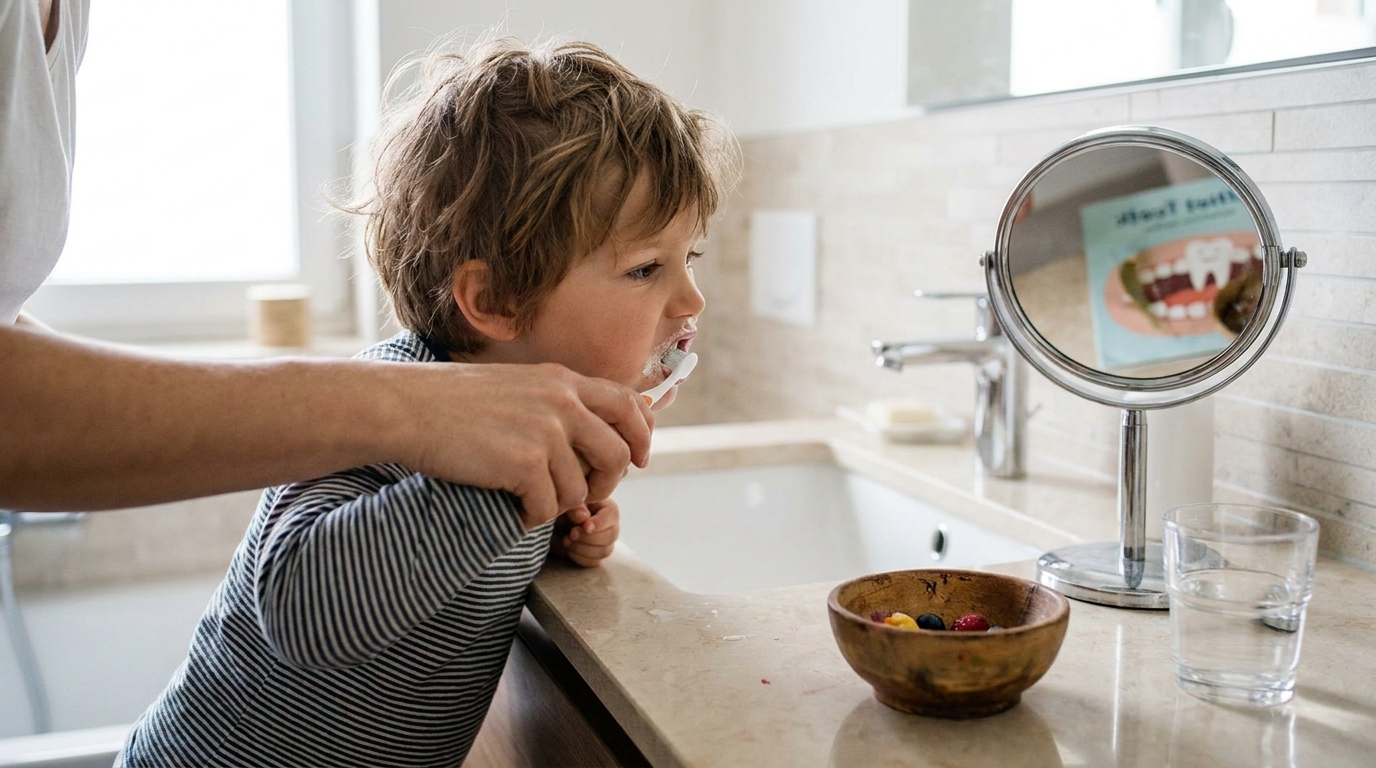
Common brushing mistakes cause persistent plaque on tooth surfaces despite daily brushing. Children typically miss tooth surfaces between teeth, along the gum line, and on back molars cleaning areas. Position the toothbrush at a 45-degree angle where teeth meet gums, using gentle circular motions rather than harsh scrubbing.
Divide the mouth into four quadrants, spending 30 seconds per quadrant to reach the recommended two-minute brushing duration. Focus on pit and fissure surfaces on chewing areas of molars where food particles accumulate. Brush inner tooth surfaces, outer surfaces, and chewing surfaces systematically to ensure complete tooth surface cleaning.
Electric toothbrush models provide superior plaque removal compared to manual toothbrush techniques for most children under age 10. The oscillating or sonic motion removes 21% more plaque according to dental research (2022). Replace toothbrush heads every three months or when bristles fray. Supervise age-appropriate brushing until children demonstrate consistent proper brushing technique around age 7-8.
Brushing Frequency and Timing Optimization
Brush immediately after breakfast and before bedtime to maximize cavity prevention strategies. Night-time brushing proves most critical because saliva production decreases during sleep, reducing natural tooth protective measures. Wait 30 minutes after consuming acidic foods before brushing to prevent tooth enamel erosion from acid-weakened surfaces.
Children should brush teeth for two minutes minimum, twice daily. Brushing frequency alone provides minimal benefit if brushing duration falls below two minutes or technique remains inadequate. Use timer apps or two-minute songs to ensure sufficient teeth cleaning technique duration.
Solution #2: Address Dietary Habits That Cause Acid Damage
Sugar consumption creates ideal conditions for cavity-causing bacteria regardless of brushing habits. Streptococcus mutans bacteria metabolize sugar within minutes, producing acids that persist for 20-30 minutes after eating. Frequent snacking affects cavity formation by creating continuous acid attacks teeth cannot recover from through natural remineralization.
Cavity Prevention Diet Modifications
Limit sugar-free alternatives containing xylitol, which inhibits bacterial growth and supports enamel protection. Eliminate sugary beverages between meals, as juice causes cavities through prolonged acid exposure. Replace worst foods that cause cavities including sticky candies, dried fruits, and crackers that cling to tooth surfaces.
Implement structured meal and snack times rather than continuous grazing. The mouth requires 2-3 hours between eating episodes for saliva to neutralize acids and facilitate tooth mineralization. Nutritional dental health improves when children consume cheese, nuts, and vegetables that stimulate saliva production and provide calcium for enamel strength.
Baby bottle tooth decay develops when infants sleep with bottles containing milk, formula, or juice. These liquids pool around teeth during reduced saliva flow, causing rampant caries on front teeth. Prevent baby bottle syndrome by offering only water in bedtime bottles after age one.
Solution #3: Optimize Fluoride Exposure for Enamel Strength
Fluoride benefits children’s teeth by integrating into enamel crystal structure, creating acid-resistant fluorapatite. Water fluoridation provides baseline protective fluoride at 0.7 ppm in most communities. However, children require additional fluoride sources for optimal cavity prevention.
Use fluoride toothpaste containing 1,000-1,450 ppm fluoride for children over age three. Children under three should use a rice-grain sized smear of toothpaste, while older children use a pea-sized amount. Supervise brushing to minimize swallowing and ensure proper application.
Professional Fluoride Treatments
Pediatric dentists apply fluoride varnish during dental checkups every 3-6 months for high-risk children. This concentrated fluoride treatment delivers 22,600 ppm fluoride directly to enamel, providing months of enhanced protection. Fluoride varnish reduces cavity risk by 43% according to systematic reviews (2021).
Professional fluoride applications complement home fluoride use without causing fluorosis when applied correctly. The dental hygienist ensures proper dosing and application technique during preventive care visits. Combined fluoride strategies provide maximum enamel protection against acid-producing bacteria.
Solution #4: Implement Between-Teeth Cleaning for Interproximal Cavities
Flossing importance cannot be overstated, as 40% of tooth surfaces lie between teeth where toothbrush bristles cannot reach. Interproximal cavities develop at contact points between adjacent teeth despite excellent brushing technique. Between teeth decay accounts for 30-40% of childhood cavities according to pediatric dental research.
Children should start flossing when teeth touch, typically around age 2-3. Parents must perform or supervise flossing technique until children develop manual dexterity around age 10. Use floss picks or floss holders to simplify the process for younger children.
Guide dental floss gently between teeth using a C-shape motion around each tooth. Scrape floss along tooth surfaces below the gum line where plaque accumulates. Floss once daily, preferably before bedtime brushing to remove food particles and bacteria from between teeth cleaning areas.
Solution #5: Manage Saliva Production and Oral Microbiome Health
Saliva plays crucial roles in cavity prevention through acid neutralization, remineralization, and antibacterial properties. Dry mouth causes cavities by eliminating these protective mechanisms. Children with chronic mouth breathing, certain medications, or medical conditions experience reduced saliva flow.
Addressing Dry Mouth in Children
Mouth breathing causes cavities through prolonged oral dryness, particularly during sleep. Consult your pediatric dentist and physician about addressing underlying allergies, enlarged tonsils, or deviated septum causing mouth breathing. Medications affect cavity risk in children including antihistamines, asthma medications, and ADHD treatments that reduce saliva production.
Encourage water consumption throughout the day to maintain saliva production and rinse away food particles. Sugar-free gum containing xylitol stimulates saliva flow while inhibiting Streptococcus mutans growth. Avoid mouthwash containing alcohol, which causes oral dryness and disrupts healthy oral bacteria.
Advanced Solutions: Genetic Factors and Protective Interventions
Genetic predisposition cavities affects some children despite optimal oral hygiene practices. Family history cavities indicates inherited factors including enamel defects, saliva composition, and oral microbiome characteristics. Children with enamel hypoplasia have thin or poorly mineralized enamel requiring extra protective measures.
Dental Sealants for Pit and Fissure Protection
Dental sealants provide mechanical barriers over deep grooves on molars where bacteria accumulate. The pediatric dentist applies thin plastic coatings to chewing surfaces, preventing food and bacteria from entering pits and fissures. Sealants reduce cavity risk by 80% in treated teeth according to the American Dental Association (2023).
Children should get dental sealants around age 6 when first permanent molars erupt, then again at age 12 for second molars. How long do dental sealants prevent cavities depends on retention, typically lasting 5-10 years with proper care. The dental exam during preventive dental services identifies sealant wear requiring reapplication.
Managing Cavities During Orthodontic Treatment
Preventing cavities with braces requires enhanced oral hygiene routines and specialized tools. Orthodontic brackets create additional plaque retention areas around hardware. Use interdental brushes, floss threaders, and water flossers for cavity prevention during orthodontic treatment. Schedule dental visits every 3-4 months during active orthodontic care for early cavity detection.
Prevention Strategy: Comprehensive Long-Term Care
Achieving cavity-free teeth requires consistent implementation of multiple prevention strategies simultaneously. Schedule dental visit frequency every six months minimum, or quarterly for high-risk children. What happens at pediatric dental checkup includes professional teeth cleaning, fluoride application, and cavity screening using visual examination and x-rays when indicated.
Early signs of cavities in children include white spot lesions indicating early demineralization. The dental hygienist can reverse these precavities through enhanced fluoride treatments and dietary counseling before tooth restoration becomes necessary. Professional preventive care complements home oral hygiene practices for comprehensive protection.
Creating Sustainable Healthy Teeth Habits
Establish consistent dental care routine including brushing, flossing, and dietary modifications. Make oral health habits enjoyable through reward systems, fun toothbrushes, and family brushing together. Teach kids proper brushing technique through demonstration and positive reinforcement.
Monitor children’s oral health by regularly checking for early childhood caries signs. Parents should lift lips monthly to inspect for white spots, brown discoloration, or visible cavities on teeth. Addressing problems early through preventive measures prevents severe tooth decay requiring extensive cavity treatment.
Understanding why kids get cavities despite brushing empowers families to implement targeted solutions. By addressing technique, diet, fluoride, flossing, and professional care comprehensively, most children can achieve excellent children’s oral health and avoid recurring cavities. The combination of proper home care and regular pediatric dental care creates the foundation for lifelong cavity prevention and optimal tooth enamel strength.