When Should a Child Have Their First Dental Visit? Complete Guide for Parents
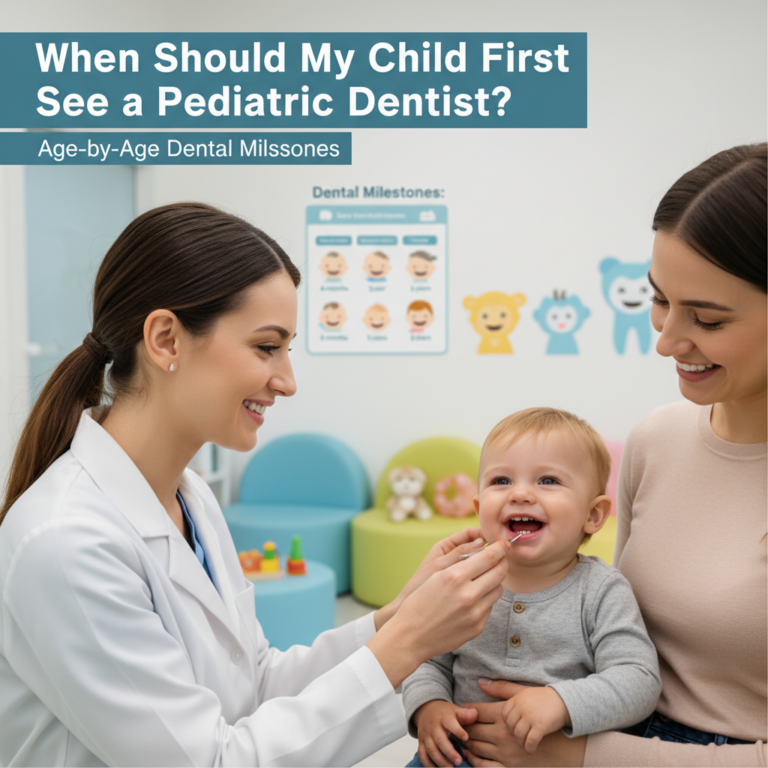
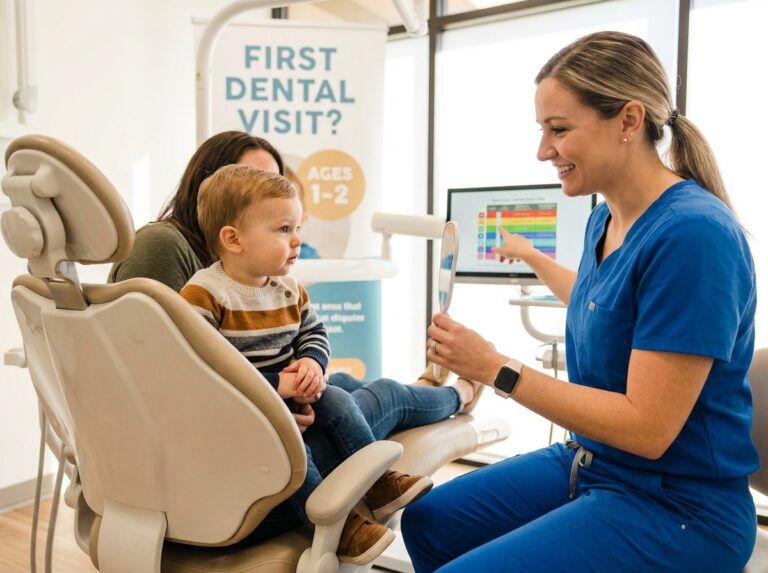
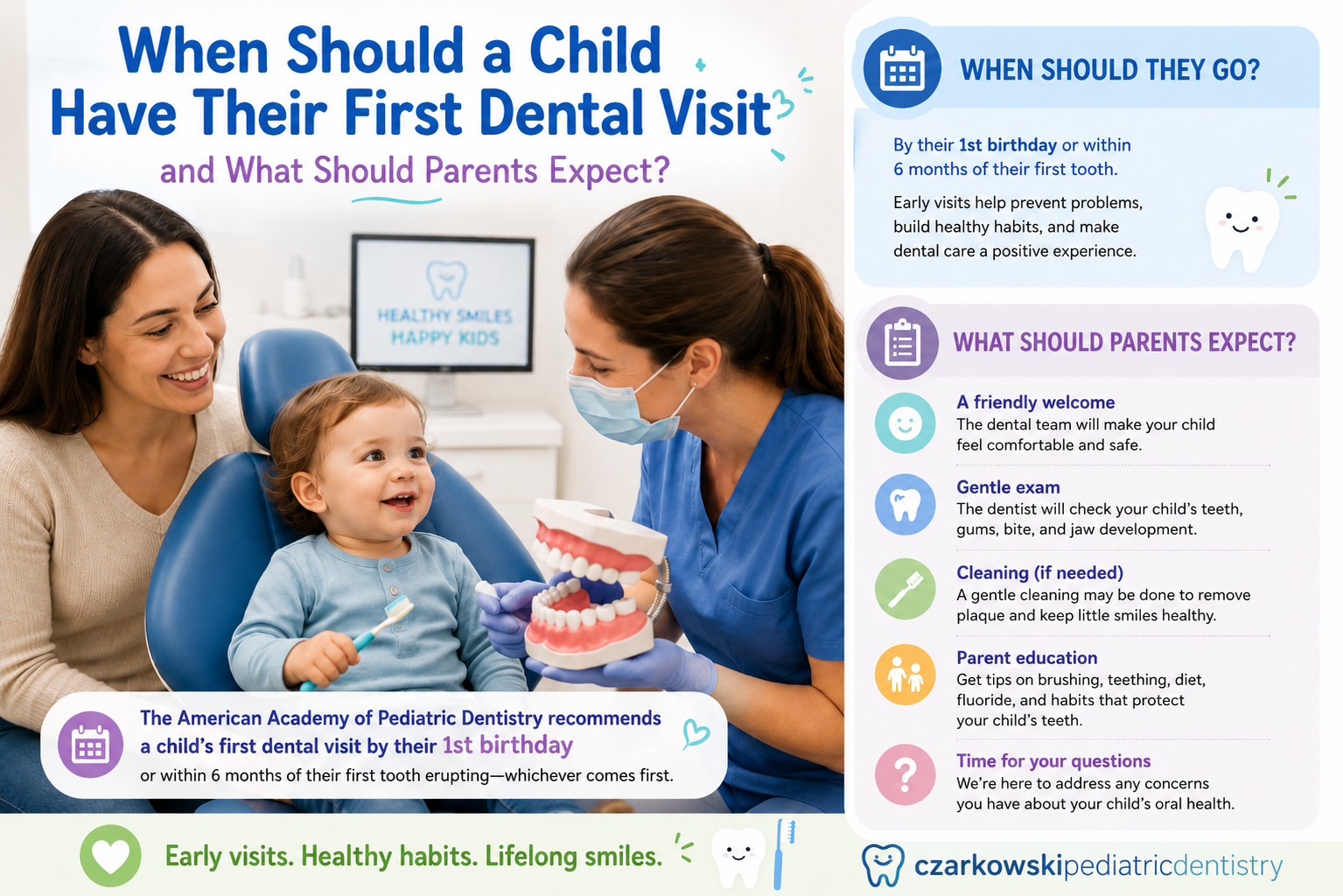
A child’s first dental visit should occur by their first birthday or within six months after the first tooth erupts, according to the American Academy of Pediatric Dentistry (AAPD, 2023). This initial dental appointment establishes preventive care foundations that protect primary teeth and promote lifetime oral health. Early dental visits allow pediatric dentists to identify cavity risk factors, provide parent dental education, and create positive dental experiences before problems develop.
The timing recommendation represents a significant shift in pediatric oral care philosophy. Rather than waiting until all baby teeth emerge or problems appear, preventive pediatric dentistry emphasizes early dental intervention. This approach addresses early childhood caries, the most common chronic disease affecting young children, with greater effectiveness than reactive treatment strategies.
Key Characteristics of the First Pediatric Dental Visit

The first dental visit differs substantially from routine dental care for older children. Understanding these distinctive characteristics helps parents prepare appropriately and set realistic expectations.
Examination-Focused Rather Than Treatment-Oriented
The initial dental appointment prioritizes oral health assessment over dental cleaning or invasive procedures. A pediatric dentist examines the oral cavity, gums, and existing primary teeth to evaluate tooth development and identify potential concerns. This infant dental screening typically lasts 15-30 minutes and establishes baseline documentation for future dental health monitoring.
Parent Education as Primary Objective
Dental professionals dedicate substantial appointment time to teaching proper infant oral hygiene routines. Parents receive guidance on age-appropriate dental care, including toothbrush selection, fluoride toothpaste quantities, and techniques for baby mouth cleaning. The dental hygienist or pediatric dentist addresses bottle feeding impacts, breastfeeding oral health considerations, and sugar exposure management.
Comfort and Trust Building
Creating a child-friendly dental practice environment takes priority during first visits. The dental office experience introduces infants and toddlers to the dental chair, waiting room atmosphere, and appointment scheduling processes in low-stress conditions. This foundation supports fear-free dentistry and reduces dental anxiety in subsequent visits.
Dental Home Establishment
The AAPD defines a “dental home” as an ongoing relationship between the dentist and patient that provides comprehensive, accessible, coordinated oral health care. Establishing this dental home by age one ensures continuity of preventive dental care throughout childhood. Families gain a consistent resource for oral health questions and urgent dental concerns.
Risk Assessment and Personalized Prevention Plans
Pediatric dentists conduct cavity risk evaluation based on family history, diet patterns, fluoride exposure, and oral hygiene practices. This assessment informs customized prevention strategies, which may include fluoride varnish application, dietary counseling, or modified examination schedules for high-risk children.
How the First Dental Appointment Works: Step-by-Step Process
Understanding the dental visit process reduces parental uncertainty and helps families prepare effectively for this oral health milestone.
Step 1: Initial Welcome and Paperwork (5-10 minutes)
Upon arrival, dental office staff guide families through administrative procedures. Parents complete health history forms detailing medical conditions, medications, and previous dental concerns. Many practices accepting dental insurance, Medicaid, or CHIP verify coverage at this stage. The dental assistant may provide a tour of the child-friendly dental office to familiarize families with the environment.
Step 2: Positioning for Examination (2-3 minutes)
For infants and young toddlers, dentists often use the “knee-to-knee exam” technique. The parent and pediatric dentist sit facing each other with knees touching. The child reclines across both laps, head in the dentist’s lap, creating a stable, comfortable position for the oral examination. Older toddlers may sit independently in the dental chair with parent support nearby.
Step 3: Comprehensive Oral Health Assessment (5-10 minutes)
The pediatric dentist systematically examines multiple aspects of infant oral health:
- Tooth eruption monitoring: Documenting which primary teeth have emerged and assessing the tooth emergence timeline
- Tooth enamel evaluation: Checking for white spots or discoloration indicating early tooth decay
- Gum health inspection: Examining gum tissue for inflammation or abnormalities
- Oral cavity assessment: Evaluating tongue mobility, palate formation, and oral tissue health
- Bite relationship: Observing how upper and lower teeth align as they emerge
- Soft tissue examination: Checking lips, tongue, and cheek tissues for lesions or concerns
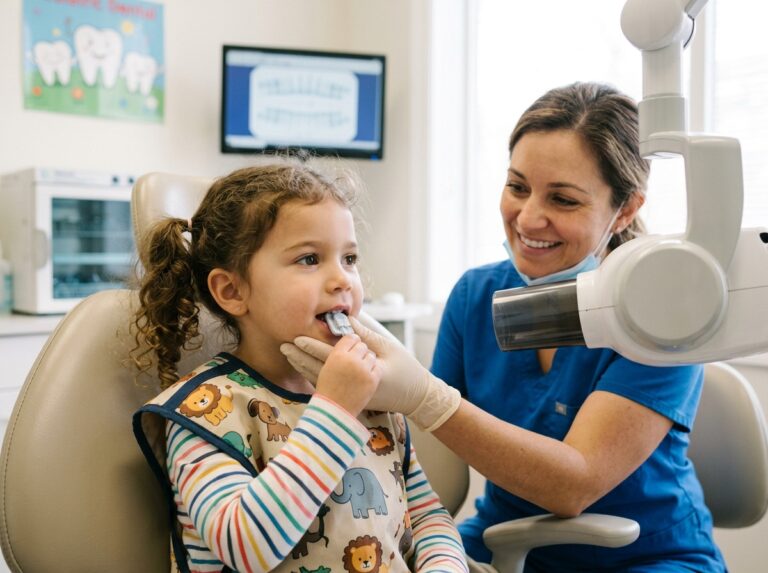
Dental X-rays are rarely necessary during first dental visits for healthy children with low cavity risk. Radiographs typically begin around age 2-3 years when posterior teeth touch.
Step 4: Preventive Treatment Application (3-5 minutes)
Depending on cavity risk factors, the pediatric dentist may apply fluoride varnish to strengthen tooth enamel. This quick procedure involves painting a concentrated fluoride solution on tooth surfaces. Unlike fluoride treatment for older children, infant fluoride application requires no waiting period before eating or drinking.
For children over age 2-3 years during subsequent visits, dental sealants may be recommended for permanent molars to prevent tooth decay in deep grooves.
Step 5: Parent Education Session (5-10 minutes)
The dental professional provides comprehensive guidance tailored to the child’s age and identified risk factors:
- Proper brushing technique: Demonstrating correct tooth brushing methods and appropriate toothpaste amounts (rice-grain size for infants, pea-size for toddlers)
- Dietary counseling: Discussing sugar intake, frequency of snacking, and cavity-promoting foods
- Bottle and sippy cup management: Explaining nursing bottle syndrome prevention and nighttime feeding cavities risks
- Pacifier and thumb sucking guidance: Advising on habit duration and potential dental impacts
- Teething support: Providing strategies for managing teething discomfort and the teething process timeline
- Fluoride supplementation: Determining if fluoride drops or tablets are needed based on water fluoridation status
Step 6: Future Planning and Questions (3-5 minutes)
The appointment concludes with scheduling the next dental checkup (typically six months later for routine preventive dental visits) and answering parent questions. Families receive written materials reinforcing healthy dental habits and emergency contact information.
Common Misconceptions About Children’s First Dental Visits

Myth: Wait Until Age 3 or When All Baby Teeth Emerge
Reality: The AAPD explicitly recommends first dental visits by age one, not age three. Early childhood caries can develop as soon as teeth appear, making prevention during the first year critical. Waiting until preschool age means missing crucial opportunities for early dental intervention and cavity prevention strategies.
Myth: Baby Teeth Don’t Matter Because They Fall Out
Reality: Primary teeth serve essential functions beyond temporary chewing assistance. They maintain space for permanent teeth, support proper speech development, and influence facial structure formation. Tooth decay in baby teeth can spread to developing permanent teeth and cause pain requiring emergency treatment. Establishing the dental health foundation during infancy protects both primary dentition and future permanent teeth.
Myth: Infants Are Too Young to Cooperate
Reality: Pediatric dentists specialize in age-appropriate dental care techniques that work effectively for infants and toddlers. The knee-to-knee examination method provides gentle control while maintaining parent proximity. Brief examination duration (5-10 minutes) matches infant attention spans. Most babies tolerate first visits well, especially when scheduled during alert, content periods rather than naptime.
Myth: First Visits Require Extensive Dental Cleaning
Reality: Professional dental cleaning (prophylaxis) is typically not performed during infant dental appointments. The pediatric dental examination focuses on assessment, education, and preventive treatment like fluoride varnish. Traditional cleaning with specialized instruments begins when children can tolerate the process, usually around age 2-3 years during subsequent routine dental care visits.
Myth: Only Pediatric Dentists Can See Young Children
Reality: While pediatric dentists receive specialized training in children’s oral health, some family dentists and general dentists also provide excellent infant dental care. The key factor is the provider’s experience and comfort level with toddler dentistry. When deciding when to schedule a child’s first dental visit, families should choose providers who regularly treat young children and maintain child-friendly dental practice environments.
First Dental Visit vs. Regular Dental Checkups
Parents often confuse initial dental appointments with standard six-month dental visits. These serve distinct purposes within the preventive dental care continuum.
Scope Differences
The first dental visit emphasizes oral health assessment, parent education, and establishing the patient-provider relationship. Regular dental checkups build upon this foundation with more thorough dental examinations, professional cleaning as appropriate, fluoride treatments, and progressive monitoring of tooth eruption and development. The initial visit creates the dental home; subsequent visits maintain and expand upon that preventive care framework.
Duration and Complexity
First dental appointments typically last 20-40 minutes with significant time devoted to parent instruction and comfort-building. Routine dental visits may extend 30-60 minutes as children grow older and tolerate more comprehensive procedures like detailed dental cleaning, dental X-rays (typically starting age 2-3), and dental sealant application.
Examination Techniques
Initial infant dental screenings often use the knee-to-knee positioning method with visual examination only. Regular checkups transition to traditional dental chair positioning as children mature, incorporating dental instruments, periodontal probing, and cavity detection tools appropriate for the child’s developmental stage.
Practical Applications: Preparing for a Successful First Visit
Scheduling Strategy
Book the baby dental checkup for times when children are typically alert and content—mid-morning often works well for infants. Avoid scheduling during typical naptime or late afternoon when fatigue increases dental anxiety and reduces cooperation. Contact the dental office about appointment scheduling flexibility if your child has unpredictable sleep patterns.
What to Bring Checklist
Prepare these items for the first dental appointment:
- Insurance cards (dental insurance, Medicaid, or CHIP documentation)
- Completed health history forms (often available online before the visit)
- List of current medications or supplements
- Comfort items (favorite toy, blanket, or pacifier)
- Questions list for the pediatric dentist
- Bottle or sippy cup for post-appointment comfort
Managing Dental Anxiety
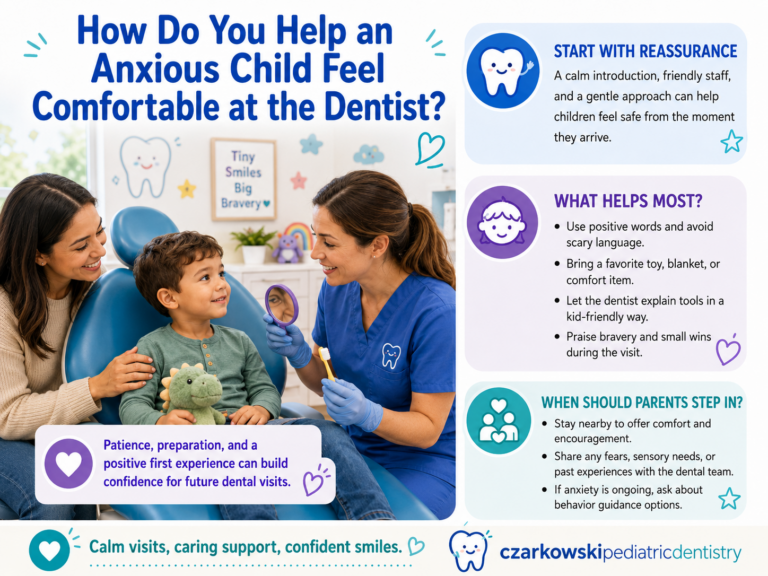
Even young children sense parental stress, affecting their own comfort levels. Parents should maintain calm, positive attitudes when discussing the dental visit. Avoid using phrases like “don’t worry” or “it won’t hurt,” which introduce fear concepts. Instead, describe the visit matter-of-factly: “The dentist will count your teeth and make sure they’re healthy.”
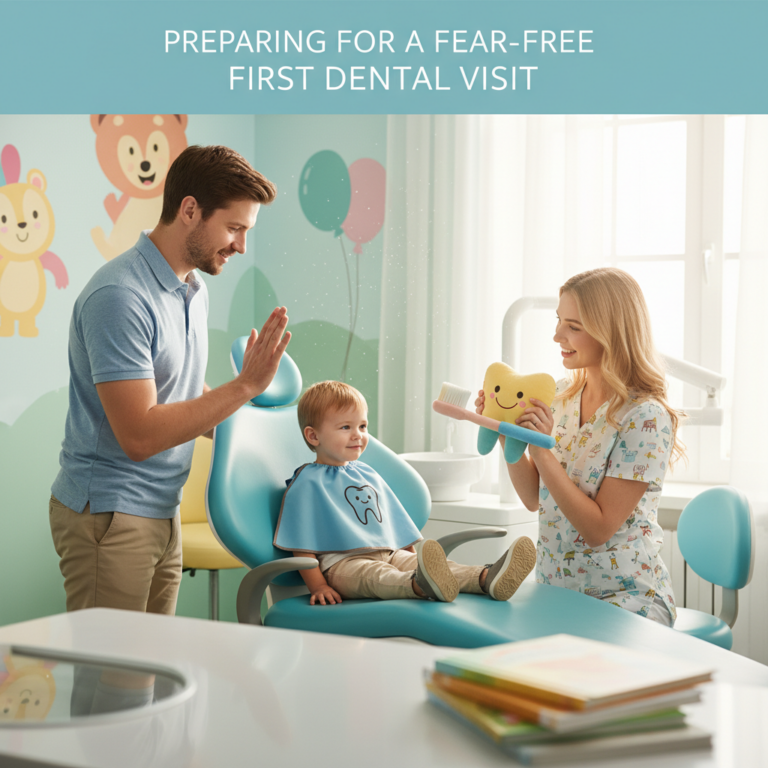
For toddlers showing dental visit anxiety, read age-appropriate books about dental visits beforehand. Some dental offices welcome brief pre-appointment visits to tour the waiting room and meet staff without examination pressure.
Post-Visit Reinforcement
After a successful first dental experience, reinforce positive associations. Praise the child’s cooperation, establish children’s brushing habits based on dental guidance received, and maintain the regular dental visits schedule recommended by the pediatric dentist. Consistency in preventive dental visits every six months normalizes dental care as routine health maintenance.
Addressing Common Questions at First Visits
Parents frequently ask pediatric dentists about:
- Fluoride safety: Appropriate toothpaste amounts and fluoride supplementation needs
- Teething relief: Safe methods for managing gum discomfort during tooth emergence
- Bottle weaning: Timeline for transitioning from bottle feeding to reduce baby bottle tooth decay risk
- Injury prevention: Protecting teeth as toddlers become mobile
- Oral habits: When thumb sucking or pacifier use becomes problematic for tooth alignment
Long-Term Benefits of Early Dental Care
Establishing preventive care by the first birthday delivers measurable advantages extending throughout childhood. Children with dental homes before age one experience significantly lower rates of early childhood caries compared to those with delayed first visits (AAPD Research, 2023). Early dental intervention allows identification and modification of cavity risk factors before enamel damage occurs.
The parent dental education component creates ripple effects beyond the individual child. Families learn proper infant gum care, optimal nutrition for dental health, and cavity prevention strategies applicable to siblings. Primary care physicians and pediatricians increasingly coordinate with dental professionals to ensure comprehensive child health, but dental homes provide specialized oral health expertise.
Perhaps most importantly, positive first dental experiences establish attitudes toward dental care lasting into adulthood. Children who begin regular dental visits as infants view dental appointments as normal, routine healthcare rather than anxiety-provoking events. This comfortable relationship with oral health services increases the likelihood of maintaining preventive dental care throughout life, ultimately reducing dental disease burden and associated treatment costs.
The investment of 30 minutes for a baby’s first dental visit yields decades of oral health benefits when combined with consistent home care and regular dental checkups. By following AAPD first visit guidelines and establishing dental homes during infancy, parents provide children with dental health foundations supporting lifetime oral health and overall wellbeing.