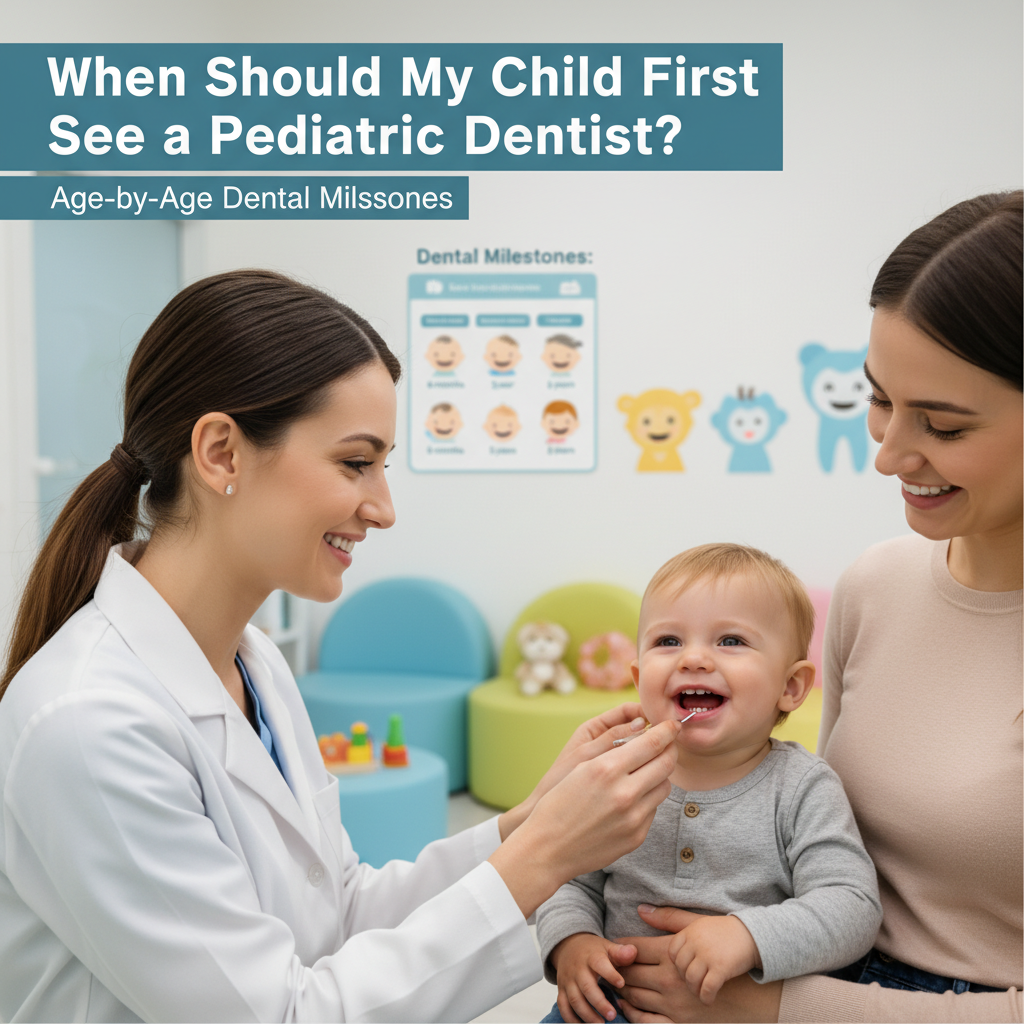
When Should My Child First See a Pediatric Dentist? Age-by-Age Dental Milestones Guide
The American Academy of Pediatric Dentistry (AAPD) recommends that children have their first dental visit by their first birthday or within six months after the first tooth erupts. This timing allows a pediatric dentist to establish a dental home, assess caries risk, and prevent early childhood caries (ECC) through preventive dentistry interventions. According to the American Dental Association (ADA), early dental intervention reduces the likelihood of dental cavity development by 40% compared to children who first visit after age three.
Comparison: Early Dental Visits vs Traditional Approach
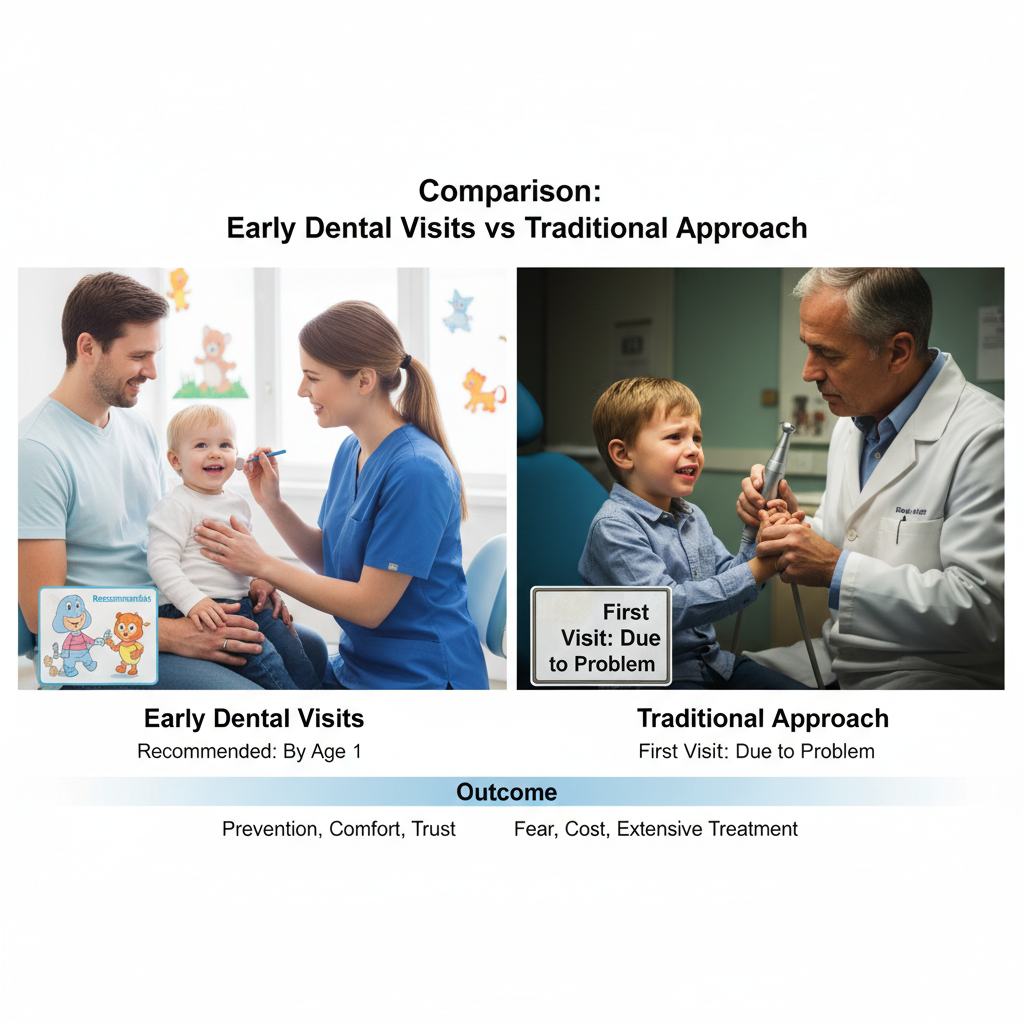
| Feature | Early Visit (Age 1 or First Tooth + 6 Months) | Traditional Approach (Age 3+) |
|---|---|---|
| Timing | First birthday or 6 months after first tooth appearance | Age 3 or when all primary teeth have erupted |
| Prevention Focus | Proactive cavity prevention and oral health screening | Reactive treatment after problems develop |
| Risk Assessment | Early cavity risk factors identification | Limited early intervention opportunities |
| Parental Education | Infant oral care guidance, bottle feeding habits, teething relief | Assumes parents already know proper care techniques |
| Dental Anxiety Prevention | Familiarization reduces dental phobia development | Higher likelihood of dental anxiety at first visit |
| Cost Implications | Lower lifetime dental costs (preventive focus) | Higher treatment costs for established problems |
| Childhood Caries Rate | 23% lower incidence according to AAPD data | Standard baseline incidence |
Why Does the Timing of Your Child’s First Dental Visit Matter?
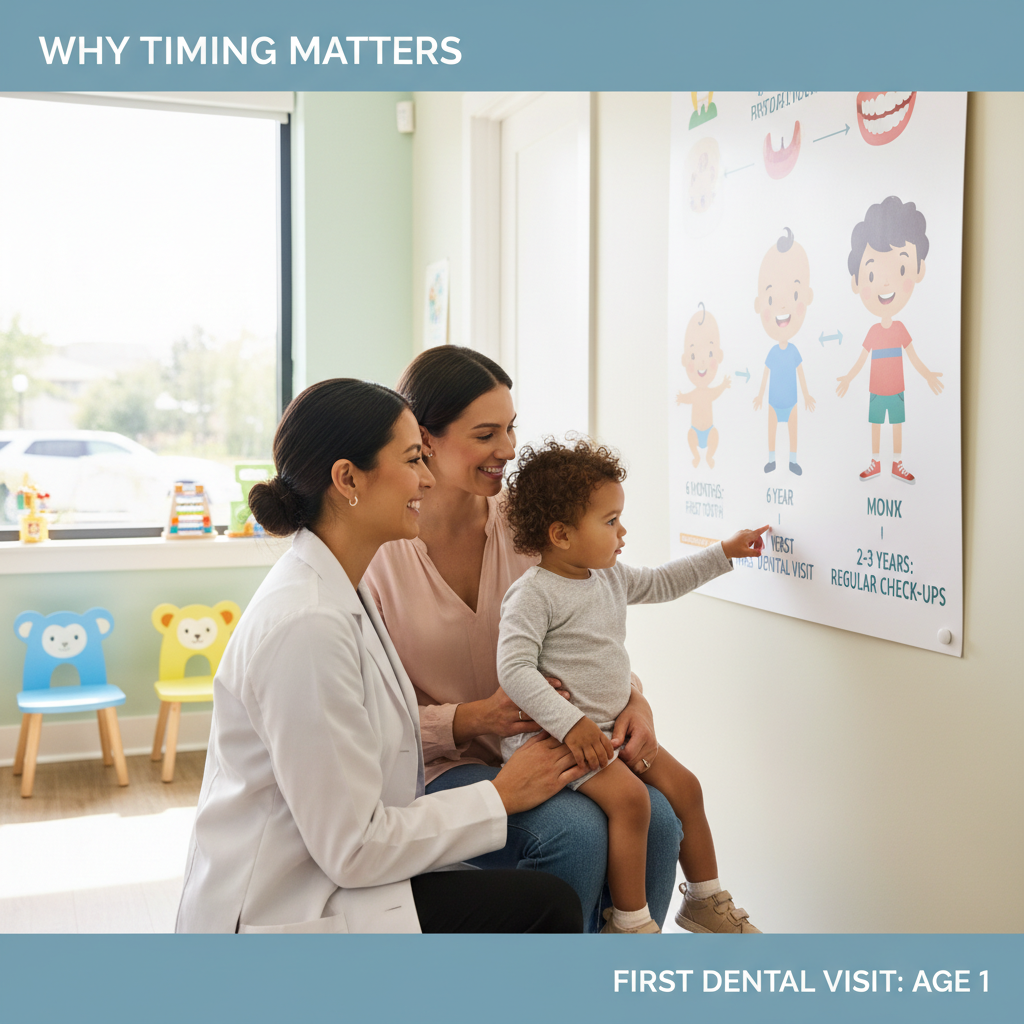
The recommended age for first dental checkup has shifted dramatically over the past two decades. Research published by the AAPD in 2019 demonstrates that baby bottle tooth decay and early childhood caries develop rapidly between ages 1-3. By establishing a dental home during the first year, parents receive critical guidance on infant tooth care, proper bite development, and cavity prevention children strategies.
Tooth decay is the most common chronic childhood disease, affecting approximately 20% of children aged 2-5 years according to the Centers for Disease Control and Prevention (CDC, 2021). Baby teeth (primary teeth) serve essential functions beyond chewing: they maintain space for permanent teeth, support proper speech development teeth, and contribute to jaw alignment children. When decay damages these deciduous teeth prematurely, it can affect tooth development stages throughout childhood.
A pediatric dental specialist provides age-appropriate dental care that differs significantly from general dentistry. These professionals complete 2-3 additional years of specialized training in childhood oral hygiene, child dental development, and managing kids dental anxiety. Early dental visits allow the dental hygienist and pediatric dentist to detect malocclusion, monitor tooth eruption schedule, and provide fluoride treatment kids when tooth enamel is most vulnerable.
Age-by-Age Dental Milestones: What Parents Should Expect
Birth to 12 Months: Infant Oral Care Foundation
During the first year, parents should focus on baby gum care even before the first tooth appearance. Clean infant gums with a soft, damp cloth after feeding to remove bacteria and sugar residue. The first tooth typically erupts around 6 months of age, though the primary tooth eruption timeline varies significantly.
Key milestones for infant dental visit:
- Birth-6 months: Baby gum care, assessment of bottle feeding and breastfeeding practices
- 6-12 months: First tooth erupts (usually lower central incisors), begin brushing baby teeth with fluoride-free training toothpaste
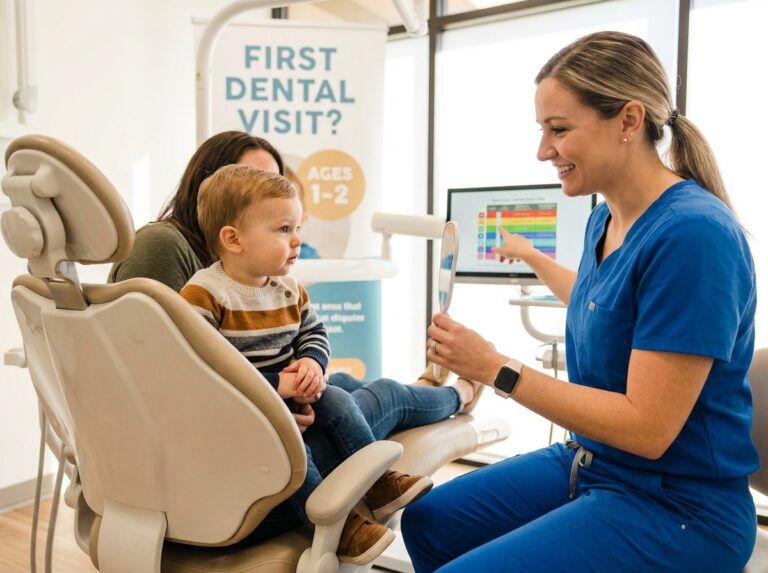
- 12 months: First dental appointment age—schedule initial dental visit for oral health assessment
- Teething symptoms management: Use teething relief methods like chilled teething rings
According to AAPD first dental visit recommendations, this initial appointment focuses on infant oral examination, parental education about nursing at night teeth concerns, and establishing positive dental experience foundations. Parents learn when to start brushing, appropriate toothpaste amount children should use, and how to prevent baby bottle cavities.
Ages 1-3: Toddler Dentistry Critical Period
The toddler years represent the highest risk period for early childhood caries development. Primary dentition continues emerging, with most children having 20 baby teeth by age 3. This stage requires vigilant attention to toddler teeth cleaning and cavity risk factors.
Toddler dental development milestones:
- 12-18 months: First molars erupt, increasing surface area for dental plaque accumulation
- 16-23 months: Canine teeth emerge, completing front tooth development
- 23-31 months: Second molars erupt, completing primary dentition
- 24 months: Begin fluoride toothpaste kids usage (rice-grain sized amount)
- Age 2-3: Twice yearly cleaning schedule established for dental checkup intervals
During toddler dentistry visits, the pediatric dentist monitors tooth eruption timeline, assesses pacifier use effects and thumb sucking impact on bite alignment, and may recommend dental sealants children for decay-prone molars. Parents receive guidance on transitioning from sippy cup to regular cup to prevent sippy cup tooth decay, and learn proper brushing technique demonstration.
This is also the critical window for addressing bedtime bottle habits. Prolonged bottle feeding at night allows sugar and carbohydrates to pool around teeth, creating ideal conditions for bacteria proliferation and tooth decay. The AAPD recommends discontinuing bedtime bottles by 12-14 months to prevent baby bottle tooth decay.
Ages 3-6: Preschool Dental Visits and Preparation
Preschool years focus on reinforcing childhood oral hygiene habits and preparing for mixed dentition (combination of primary and permanent teeth). Children develop greater dexterity for tooth brushing toddlers techniques and may begin learning how to floss toddler teeth correctly under supervision.
Preschool dental care milestones:
- Age 3: Pea-sized amount of fluoride toothpaste for children age 3+
- Age 3-4: Children can begin learning proper brushing technique with supervision
- Age 4-5: Introduction to dental floss for cleaning between teeth
- Age 5-6: First permanent teeth may begin erupting (typically lower incisors)
- Dental visits frequency: Every 6 months for how often dental checkup and preventive care
Preventive pediatric dentistry during this stage includes dental X-rays to monitor tooth development beneath the gumline, best age for dental sealants children application (typically around age 6 when six year molars erupt), and early orthodontic evaluation if malocclusion concerns arise. Research shows that interceptive orthodontics interventions during this period can reduce the need for extensive orthodontic treatment later.
For families seeking comprehensive pediatric oral care, Czarkowski Pediatric Dentistry provides specialized care focused on creating positive dental experiences while addressing age-specific developmental needs.
Ages 6-12: School-Age Dental Development
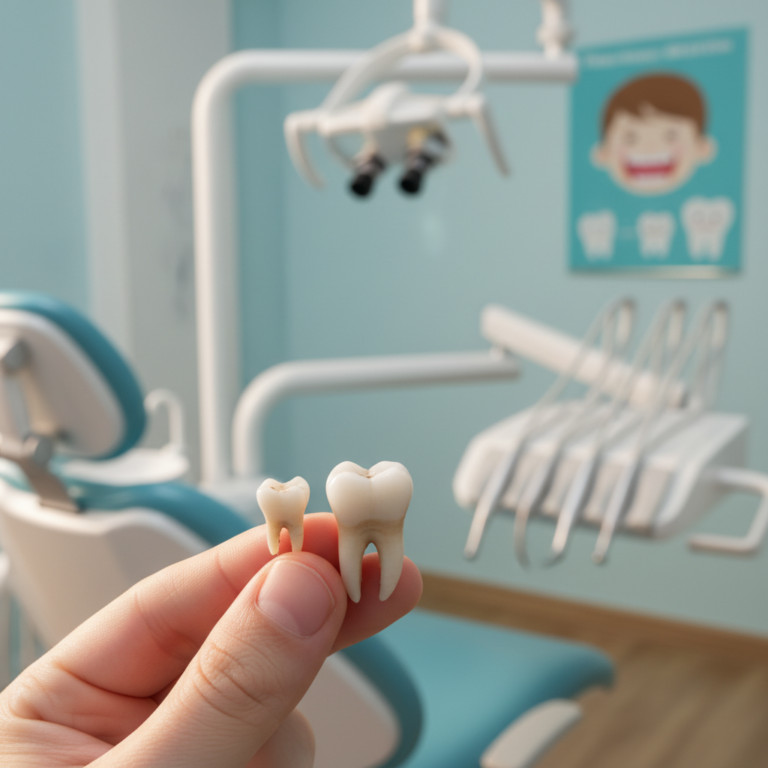
School-age children enter mixed dentition as permanent teeth begin replacing baby teeth. This transition requires careful monitoring to ensure proper space maintainers if primary teeth are lost prematurely and to track the permanent tooth eruption age chart progression.
School-age tooth development stages:
- Age 6-7: Six year molars erupt behind primary teeth (first permanent molars), lower incisors begin loosening
- Age 6-8: Central and lateral incisors replace baby teeth (tooth fairy age begins)
- Age 7-8: Early orthodontic evaluation recommended by orthodontist
- Age 9-11: Canines and premolars begin erupting, when do children lose baby teeth timeline peaks
- Age 11-13: Twelve year molars (second permanent molars) erupt
- Age 8-10: Most children can effectively brush teeth alone with periodic supervision
During this phase, preventive measures remain critical. Dental sealants protect the deep grooves of newly erupted permanent teeth, reducing cavity development by up to 80% according to ADA research. Children should continue using fluoride toothpaste and may begin using mouthwash if they can reliably spit without swallowing.
The dental hygienist provides dental health education about how sugar and cavities connect, emphasizing the importance of limiting juice and teeth exposure to acidic beverages. Regular dental cleaning appointments allow early detection of gum disease and tooth enamel erosion before they require restorative dentistry interventions.
What to Expect During Your Child’s First Dental Visit
Preparing child for first dentist appointment significantly impacts their long-term attitude toward dental care. Understanding what to expect first dental visit helps reduce anxiety for both parents and children.
First dental appointment components:
- Oral health screening: Gentle examination of teeth, gums, and oral tissues
- Risk assessment dental: Evaluation of cavity risk factors based on diet, hygiene habits, and family history
- Cleaning: Gentle toddler teeth cleaning with soft tools appropriate for young children
- Fluoride application: Professional fluoride treatment to strengthen tooth enamel
- Parental consultation: Discussion of infant oral care practices, teething relief options, and cavity prevention strategies
- Demonstration: Teaching how to brush baby teeth properly and when to start flossing children’s teeth
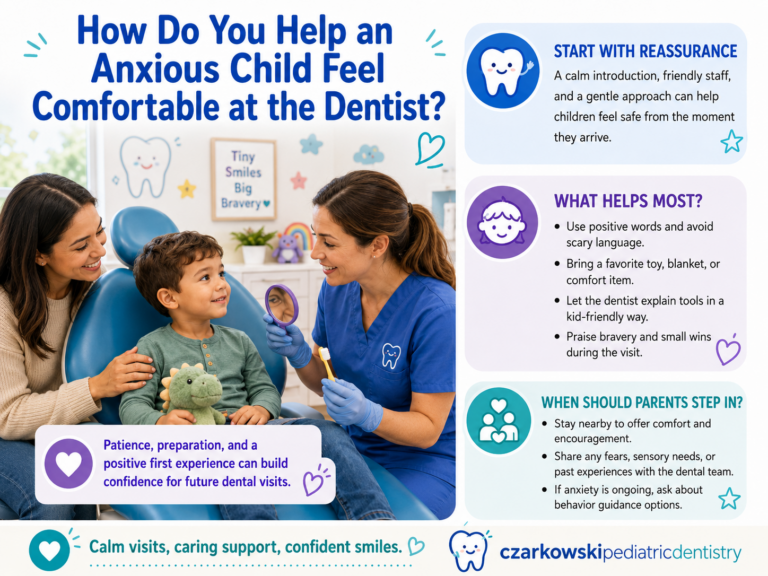
A child-friendly dentist creates a welcoming environment with age-appropriate language and positive reinforcement. For children with dental anxiety, pediatric dental offices offer accommodations ranging from gentle behavior guidance to sedation dentistry options including nitrous oxide or, in rare cases, general anesthesia for extensive treatment needs.
Use-Case Scenarios: Choosing the Right Timing for Your Child
Scenario 1: High Caries Risk Family
If parents or siblings have experienced significant tooth decay, the child inherits elevated cavity risk. Recommendation: Schedule the first dental visit immediately upon first tooth eruption (around 6 months) rather than waiting until the first birthday. Early intervention allows implementation of aggressive cavity prevention children strategies including professional fluoride treatments and dietary counseling.
Scenario 2: Bottle-Fed Infant with Night Feedings
Children who continue bottle feeding beyond 12 months, especially at bedtime, face significantly higher baby bottle cavities risk. Recommendation: Schedule the initial dental visit between 6-9 months to receive guidance on transitioning away from night bottles and establishing safe toothpaste swallow-free cleaning routines before extensive tooth eruption occurs.
Scenario 3: Child with Developmental Delays
Children with special healthcare needs may require modified approaches to oral care. Recommendation: Establish a dental home by the first birthday to develop individualized care plans, assess whether space maintainers or other interventions will be needed, and determine if sedation dentistry protocols should be considered for future treatments.
Scenario 4: Low-Risk, Healthy Development
For families with excellent oral health history, limited sugar intake children, and no concerning symptoms, slight timing flexibility exists. Recommendation: Schedule the first visit no later than the first birthday, even without obvious problems, to establish baseline documentation and receive age one dental visit importance education about upcoming developmental stages.
Decision Framework: When to Prioritize Early vs Traditional Visit Timing
Choose the early visit approach (by first birthday or 6 months after first tooth) if:
- Family history includes dental cavity or gum disease concerns
- Child uses a pacifier or engages in thumb sucking beyond age 1
- Bottle feeding continues past 12 months or includes nighttime bottles
- Parents notice white spots on teeth (early decay indicators)
- Child experiences significant teething symptoms or unusual tooth eruption patterns
- Parents want comprehensive early childhood caries prevention strategies
- Access to a pediatric dental office specializing in infant dental visit guidelines
The traditional approach (age 3+) may be considered if:
- No family history of dental problems exists
- Parents have strong understanding of infant tooth care and childhood oral hygiene
- Child demonstrates normal tooth development chart progression
- Access to early pediatric dentistry is limited due to geographic or financial constraints
However, even in low-risk scenarios, dental professionals overwhelmingly recommend the early visit approach. The 2014 AAPD policy statement emphasizes that early dental intervention establishes the foundation for lifetime oral health and significantly reduces emergency dental visits during childhood.
Finding the Right Pediatric Dentist Near Me
When searching for children’s dental health providers, prioritize board-certified pediatric dental specialists who demonstrate expertise in age appropriate dental care children and create positive dental experience environments. Look for practices that offer:
- Child-sized dental equipment and kid-friendly office design
- Experience with managing dental phobia and dental anxiety
- Comprehensive preventive pediatric dentistry services including fluoride for babies, fluoride for toddlers, and dental sealants
- Clear communication about dental milestone tracking and tooth eruption schedule expectations
- Flexible scheduling for working families
- Emergency care availability for dental concerns
Summary: Establishing Your Child’s Dental Home
The overwhelming evidence supports scheduling your child’s first dental appointment by their first birthday or within six months after their first tooth erupts. This timing aligns with AAPD first dental visit recommendations and provides optimal opportunities for cavity prevention, parental education, and positive dental experience establishment. Baby teeth play critical roles in speech development, nutrition, and space maintenance for permanent teeth—making their care far from temporary.
By following the age-by-age dental milestones outlined above and maintaining twice yearly cleaning appointments, parents set their children on a path toward lifelong oral health. Early visits cost significantly less than treating advanced childhood caries and create familiarity that reduces dental anxiety throughout life. When do babies need to see a dentist? The answer is clear: much earlier than most parents expect, and the benefits extend far beyond that first appointment.