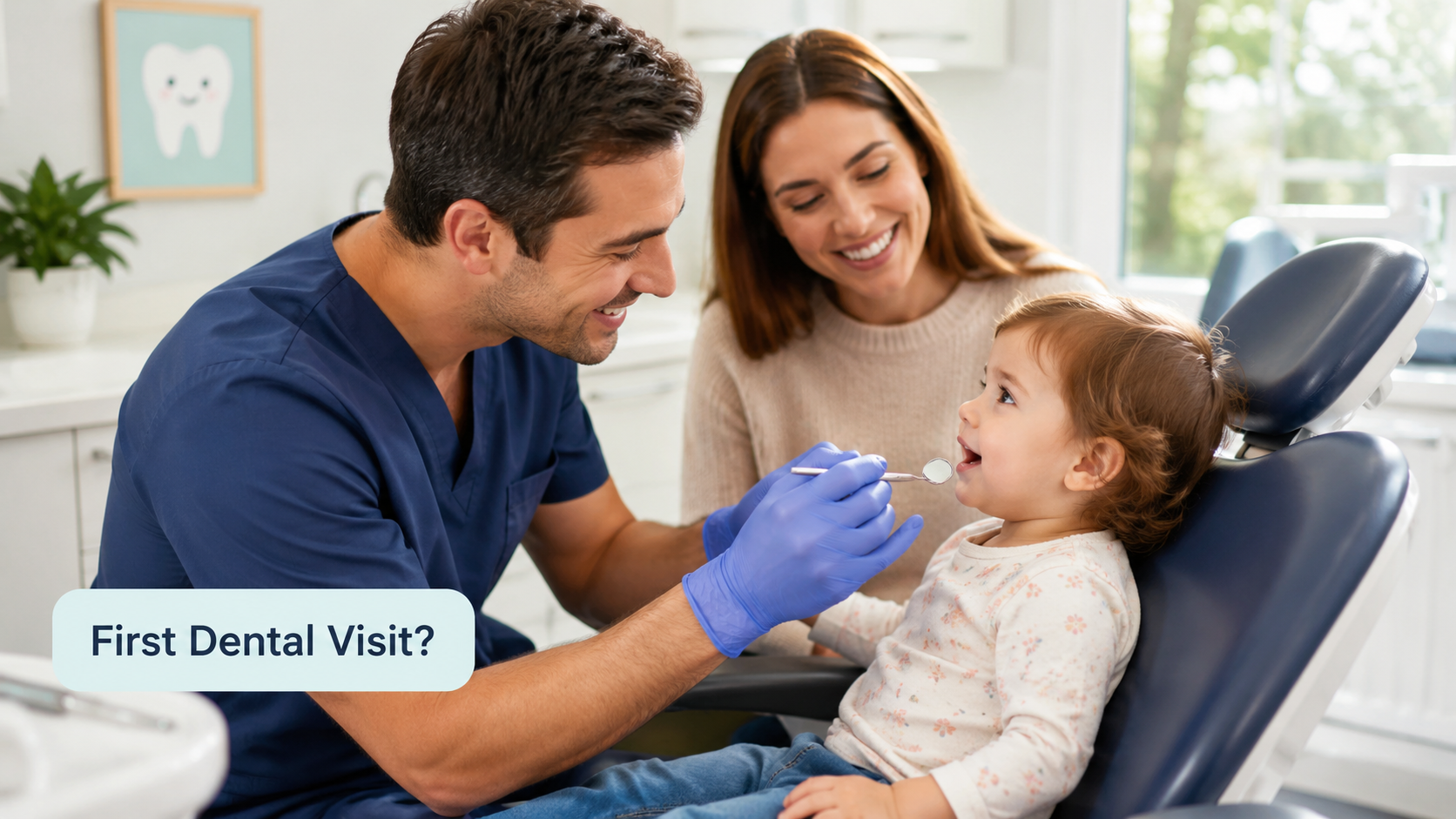
When Should a Child Have Their First Dental Visit?
According to the American Academy of Pediatric Dentistry (AAPD), a child should have their first dental visit by their first birthday or within six months after the first tooth erupts, whichever comes first. This recommendation, endorsed by the American Dental Association (ADA) as of 2025, establishes a critical foundation for lifelong oral health and enables early detection of potential dental issues.
Why Early Dental Visits Matter for Infant Oral Health

The importance of early childhood dental visits extends beyond simple examination. An initial dental visit by age one allows a pediatric dentist to assess cavity risk, evaluate tooth eruption patterns, and provide crucial oral hygiene instruction to parents. Early childhood caries affects approximately 23% of children aged 2-5 years in the United States (Centers for Disease Control, 2023), making preventive dental services essential during infancy.
The concept of establishing a dental home means creating a continuity of care relationship between the family and dental provider. This relationship facilitates routine pediatric dentistry, enables dental monitoring of growth and development, and reduces dental anxiety through familiarity. Research demonstrates that children who receive their first dental checkup by age one experience 40% fewer dental emergencies during early childhood compared to those whose first visit occurs after age three.
Key Characteristics of the Optimal First Dental Visit Timing

Understanding when to schedule your child’s first dentist appointment involves several critical factors:
1. Tooth Eruption Timeline and Examination Scheduling
Most infants experience their first tooth eruption between 6-12 months of age. The lower central incisors typically emerge first, followed by upper central incisors. The age-one dental visit recommendation ensures that even children with delayed tooth eruption receive baseline dental assessment and oral health education before significant tooth development occurs.
2. Cavity Risk Evaluation During Infancy
The first dental visit includes comprehensive cavity risk evaluation examining multiple factors. A dental examination assesses oral bacteria presence, particularly Streptococcus mutans, the primary cavity-causing bacteria. The dentist evaluates feeding practices, including bottle feeding, breastfeeding, and sippy cup usage patterns that may contribute to baby bottle tooth decay.
3. Preventive Care Foundation
Early dental screening establishes preventive care protocols tailored to your child’s specific needs. The dental hygienist or pediatric dentist provides age-appropriate dental care recommendations, including fluoride application when indicated, and demonstrates proper brushing techniques for babies using an infant-sized toothbrush and appropriate toothpaste amounts.
4. Parent Education and Dietary Counseling
The initial pediatric dental visit prioritizes parent education about infant cavity prevention. Dietary counseling addresses sugar exposure, nighttime feeding concerns, and on-demand feeding practices. The dentist explains how nursing caries develops and provides bottle weaning strategies to prevent prolonged nursing complications.
5. Habit Assessment and Guidance
Your baby’s first dental exam includes evaluation of oral habits such as pacifier use, thumb sucking, and other digit sucking behaviors. While these habits are normal during infancy, early oral habits counseling helps parents understand when intervention becomes necessary to protect primary teeth alignment and enamel development.
How the First Pediatric Dental Visit Works: Step-by-Step Process
Understanding what happens at the first pediatric dental visit helps reduce parental concerns and facilitates preparing your child for the first dentist visit:
Step 1: Initial Consultation and Medical History Review
The appointment begins with discussion of your child’s medical history, teething symptoms, feeding patterns, and any concerns about toddler dental care. The family dentist or pediatric dentist reviews information typically gathered during well-baby visits with your pediatrician, ensuring comprehensive health assessment.
Step 2: Oral Health Assessment and Dentition Evaluation
The pediatric oral examination includes gentle assessment of existing teeth, gum tissue, bite relationship, and oral soft tissues. The dentist evaluates tooth eruption timeline progress, checks for signs of tooth decay or dental cavity formation, and examines deciduous teeth (milk teeth) for developmental concerns. This baseline dental assessment establishes reference points for future dental monitoring.
Step 3: Cleaning and Fluoride Application (When Appropriate)
Depending on the child’s age and tooth development, the dentist may perform gentle cleaning of erupted teeth using soft materials. Fluoride needs assessment determines whether topical fluoride application is recommended. For high-risk children, professional fluoride treatments provide additional protection against dental caries.
Step 4: Parent Education Session
The dentist dedicates significant time to oral health education, covering proper baby oral hygiene techniques, appropriate toothpaste amounts (rice-grain size for infants under 3 years), and brushing techniques for babies. Discussion includes cavity prevention strategies specific to your child’s cavity risk level and developmental stage.
Step 5: Future Care Planning and Scheduling
The visit concludes with establishing regular dental visits schedule, typically every six months for routine pediatric dentistry. The dentist discusses dental development milestones to anticipate and creates a personalized preventive dental care plan. Questions about dental insurance, Medicaid, or CHIP coverage for pediatric dental services are addressed.
Common Misconceptions About First Dental Visits: Myth vs. Reality
Myth 1: Baby Teeth Don’t Require Professional Care
Reality: Primary teeth serve critical functions beyond chewing, including speech development, jaw growth guidance, and space maintenance for permanent teeth. The importance of early childhood dental visits includes protecting these essential baby teeth from early childhood caries, which can cause pain, infection, and premature tooth loss affecting permanent tooth development.
Myth 2: Waiting Until Age 3 Is Acceptable
Reality: Delaying the first dental visit until age three means missing critical prevention opportunities. According to AAPD guidelines (2024), approximately 60% of children who wait until age three for their first dental appointment already have detectable tooth decay. The best age for a first dental appointment is by the first birthday, enabling early intervention dentistry and cavity-causing bacteria management before significant damage occurs.
Myth 3: First Dental Visits Are Only Necessary After Cavity Detection
Reality: The primary purpose of the age-one dental visit is prevention, not treatment. Early dental screening advantages include identifying risk factors before dental disease develops, implementing preventive dental services, and educating parents about infant feeding counseling that prevents future problems. Waiting for visible cavities means reactive rather than preventive care.
Myth 4: Breastfeeding Doesn’t Affect Dental Health
Reality: While breastfeeding provides numerous health benefits, prolonged nighttime nursing after tooth eruption can contribute to nursing caries development. The first dental visit includes discussion of breastfeeding dental implications and safe feeding practices that protect erupting teeth while maintaining recommended infant nutrition.
Myth 5: Infants Are Too Young to Experience Dental Anxiety
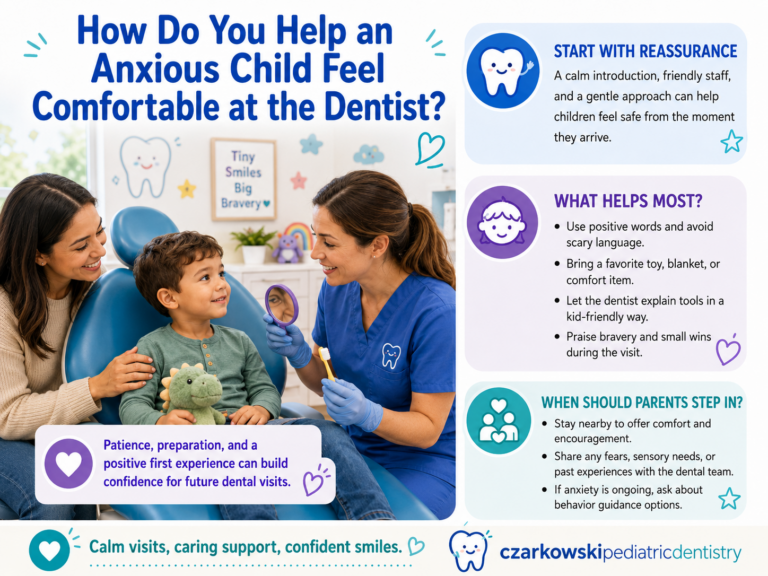
Reality: Early positive dental experiences establish patterns that reduce dental fear throughout childhood. Child dental anxiety management begins during infancy through gentle handling, parent presence, and creating positive associations with dental care. Research shows that children whose first dental visit occurs during infancy demonstrate significantly lower anxiety levels during subsequent appointments compared to those whose initial visit occurs during toddlerhood.
Pediatric Dentist vs. Family Dentist: Choosing the Right Provider for Your Child’s First Visit
Both pediatric dentists and family dentists can provide excellent infant dental care, but understanding differences helps inform your decision:
| Factor | Pediatric Dentist | Family Dentist |
|---|---|---|
| Training | Additional 2-3 years specializing in children’s dental health, infant oral examination, and child development | General dentistry training serving all ages |
| Environment | Child-focused office design, age-specific equipment, specialized in creating positive dental experiences for toddlers and infants | Adult-oriented environment suitable for whole family |
| Expertise | Specialized knowledge in primary dentition, tooth eruption monitoring, and early childhood oral health conditions | Broad experience across age groups, family continuity of dental care |
| Behavior Management | Extensive training in managing dental anxiety in young children, communication techniques specific to toddler dentistry | General behavior management applicable to all patients |
The AAPD recommends establishing your child’s dental home with either a qualified pediatric dentist or family dentist experienced in treating infants and young children. The most important factor is selecting a provider committed to preventive dentistry for children and willing to invest time in comprehensive parent education.
Practical Applications: Preparing for and Scheduling Your Child’s First Dental Appointment
Optimal Timing for the Initial Pediatric Dental Visit
The recommended dental visit timing follows this guideline: Schedule your baby’s first dental appointment when the first tooth appears or by the child’s first birthday, whichever occurs first. For children with delayed tooth eruption, the age-one visit remains important for oral health surveillance and preventive care establishment, even without visible teeth.
How to Prepare Your Baby for the First Dental Checkup
Preparation strategies for first-time dental visits include:
- Practice opening wide and gentle mouth examination at home using your clean finger
- Read age-appropriate books about dentist visits to normalize the experience
- Schedule morning appointments when infants are typically well-rested and cooperative
- Bring comfort items such as favorite toys or blankets
- Maintain calm, positive demeanor as children sense parental anxiety
- Avoid using threatening language like “it won’t hurt” which introduces fear concepts
What to Bring to the First Dental Visit
Essential items for your baby’s first dental exam include:
- Health insurance or dental insurance cards (verify pediatric dental coverage beforehand)
- List of medications or supplements your child takes
- Questions about toddler tooth decay prevention, sippy cup weaning, or other oral health concerns
- Information about family dental history, including early childhood caries in siblings
- Records from recent well-baby visits if requested by the dental office
Establishing Regular Dental Visit Patterns
Following the initial dental visit, most children benefit from routine dental visits every six months. This schedule enables ongoing dental development tracking, early caries detection, and reinforcement of preventive dental care habits. Children at higher cavity risk may require more frequent appointments for dental disease surveillance and additional fluoride treatments.
Cavity Prevention Strategies Introduced at the First Visit
The first dental checkup establishes comprehensive tooth decay prevention protocols:
Fluoride Exposure Optimization
The dentist assesses your child’s fluoride needs based on water fluoridation levels in your community, dietary sources, and cavity risk. For communities without fluoridated water, supplemental fluoride may be recommended after age six months. Proper fluoride application during early childhood reduces cavity incidence by approximately 25-30% according to ADA research (2024).
Feeding Practice Modifications
Early childhood caries prevention strategies address feeding behaviors that increase decay risk. The dentist provides specific guidance on bottle weaning timing (typically by 12-18 months), eliminating nighttime bottles containing milk or juice, and transitioning from sippy cups to regular cups by age 2-3 years to reduce prolonged sugar exposure.
Oral Bacteria Transmission Prevention
Parents learn how cavity-causing bacteria transfer from caregivers to children through saliva-sharing behaviors. Recommendations include avoiding sharing utensils, pre-chewing food, or cleaning pacifiers with your mouth. Maintaining excellent parental oral hygiene reduces oral bacteria transmission risk and protects your child’s developing dentition.
Age-Specific Oral Hygiene Protocols
The dental team demonstrates proper infant dental screening and cleaning techniques. For babies under 12 months, parents should wipe gums with clean, damp cloth after feedings and brush emerging teeth twice daily with water or minimal fluoride toothpaste. Understanding age-specific dental needs ensures appropriate care as your child develops.
Financial Considerations and Insurance Coverage
Most dental insurance plans, Medicaid programs, and CHIP provide coverage for preventive dental services including initial oral examination and routine pediatric dentistry for young children. According to 2025 data, comprehensive pediatric dental coverage through Medicaid includes examinations, cleanings, fluoride treatments, and necessary dental radiographs (x-rays) without copayments in most states.
For families without insurance, many pediatric dental practices offer payment plans or reduced-fee programs for establishing a dental home. The investment in early dental visit benefits significantly outweighs costs associated with treating advanced early childhood caries, which may require extensive restorative procedures or sedation dentistry.
Establishing care early with a qualified provider for your child’s first dentist appointment creates the foundation for positive dental experiences and optimal oral health throughout childhood and beyond. The combination of professional preventive care, parent education, and consistent home oral hygiene practices gives children the best opportunity for cavity-free primary and permanent teeth.