Is It Worth It? Cost, Benefits & Verdict
Yes, dental sealants are worth it for most children with newly erupted molars and premolars, especially those at moderate-to-high risk for tooth decay. According to the American Dental Association (ADA, 2024), sealants reduce cavity risk in molars by nearly 80% for up to two years, making them one of the most cost-effective tools in pediatric preventive dentistry.
What You Get With Dental Sealants for Kids
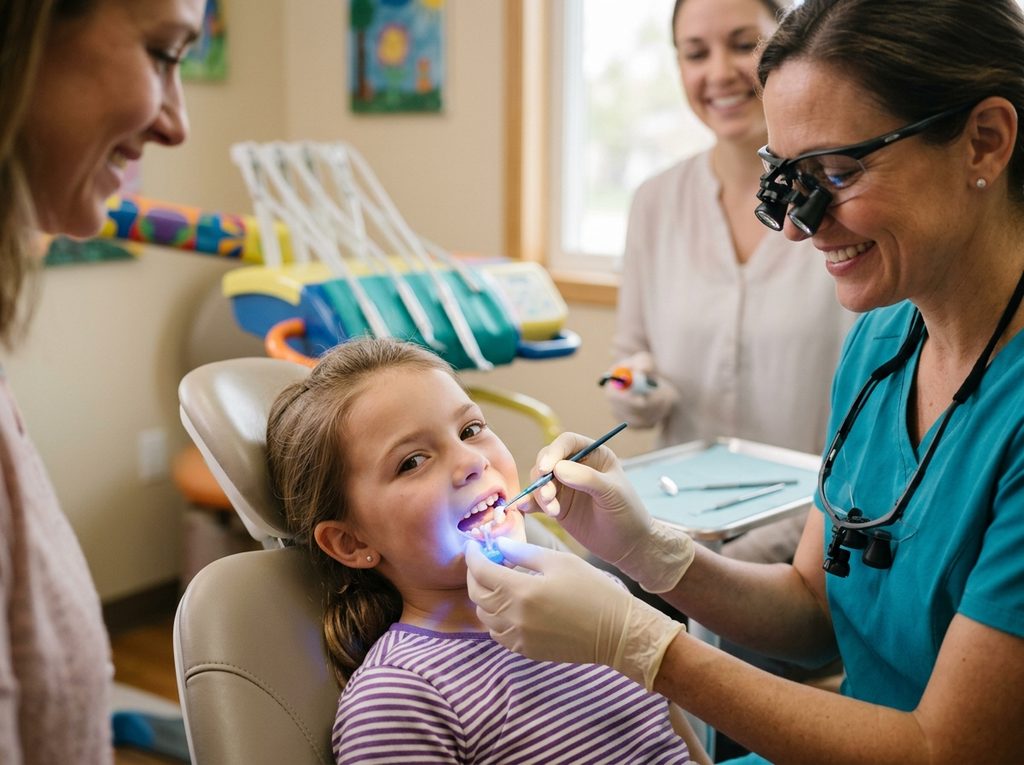
Dental sealants are thin protective coatings applied to the chewing surfaces of molars and premolars—the teeth most prone to pit and fissure decay. A pediatric dentist typically includes the following in a standard sealant visit:
- Included: Tooth cleaning and drying before application
- Included: Application of composite resin or glass ionomer sealant material
- Included: Curing light hardening (for resin-based sealants)
- Included: Bite check and polish
- Extra cost: Dental x-ray if decay is suspected beneath enamel
- Extra cost: Sealant reapplication if material chips or wears (typically every 3-5 years)
- Extra cost: Separate fluoride treatment, often recommended alongside sealants
The dental sealant procedure is quick and painless—no drilling or anesthesia is required, so sealants are not painful for kids.
Cost Breakdown: How Much Do Dental Sealants Cost for Children?
As of 2025, the cost of dental sealants for kids ranges from $30 to $60 per tooth without insurance, according to CDC (2024) data on preventive dental care pricing.
- Full mouth (4 molars): $120–$240 out-of-pocket
- With dental insurance: Many plans cover 100% for children under 14–16
- Medicaid dental coverage: Sealants are covered in most states for eligible children
- School sealant programs: Free or low-cost sealants offered through school-based dental sealant programs, per CDC (2023) initiatives targeting underserved communities
Compare this to the average cost of a filling ($150–$400 per tooth)—sealant vs filling costs make prevention the clear financial winner.
Expected Benefits & ROI Analysis
Do dental sealants really prevent cavities? Evidence says yes. The CDC (2024) reports that children without sealants have almost three times more cavities than children with sealants on their molars.
- Cavity prevention in children: Up to 80% reduction in decay risk for two years post-application
- Dental sealant longevity: Sealants can last 5–10 years with proper care
- Cost savings: One sealant treatment can prevent hundreds of dollars in future filling or crown costs
- Time savings: Fewer dental visits for cavity treatment mean less missed school and work
Fluoride vs sealants isn’t an either/or choice—fluoride strengthens enamel broadly, while sealants physically block bacteria from settling into deep grooves. Used together, they offer layered cavity prevention.
How Long Do Dental Sealants Last on Kids’ Teeth?
Most sealants last 5 to 10 years, though dental sealant maintenance tips include avoiding excessive chewing on ice or hard candy, which can cause sealants to fall off children’s teeth prematurely. Routine dental checkups allow the pediatric dentist to monitor wear and reapply as needed.
Who Should—and Shouldn’t—Invest in Sealants
Good Candidates
- Children ages 6–14, when first and second permanent molars erupt
- Kids with deep pits and fissures in molars, visible during a dental checkup
- Children with limited access to fluoride or inconsistent oral hygiene routines
- Families seeking affordable pediatric preventive dentistry, especially through Medicaid dental coverage or school programs
Less Ideal Candidates
- Children with only baby teeth and low cavity risk—sealants for baby teeth are not routinely recommended by the ADA (2024) unless decay history exists
- Kids with existing large cavities requiring fillings, not sealants
- Children with known sensitivities to composite resin materials (rare, but should be discussed with a pediatric dentist)
What age should children get dental sealants? Most pediatric dentists recommend application soon after first and second molars fully erupt, typically ages 6 and 12.
Dental Sealant Safety: Addressing the Risks
Are dental sealants safe for children’s teeth? Yes—according to the ADA (2024), sealants are safe, though trace amounts of Bisphenol A (BPA) exist in some composite resin formulas. Exposure levels are minimal, far below any established health risk threshold. Choosing a provider who uses BPA-free glass ionomer sealant options can further reduce this concern for cautious parents.
Alternatives to Consider
If sealants aren’t the right fit, consider these dental sealant alternatives:
- Fluoride varnish treatments: Strengthen enamel across all teeth, not just molars
- Improved oral hygiene routine: Consistent brushing, flossing, and reduced sugar intake
- More frequent dental checkups: Early detection of tooth decay in children before it progresses
- Combination approach: Sealants plus fluoride for maximum early childhood caries prevention
Parents exploring comprehensive options can consult a trusted provider offering dental sealants for kids alongside broader children’s dentistry services to build a complete pediatric oral care routine.
Final Verdict: Are Dental Sealants a Good Investment for Kids’ Oral Health?
Dental sealants are worth it for the vast majority of children with permanent molars and premolars, particularly those at elevated risk for cavities. The pros of dental sealants—low cost, high effectiveness, painless application—outweigh the minor cons, such as periodic reapplication and negligible BPA exposure.
Is it worth getting sealants for my child’s molars? If your child is between ages 6 and 14, has visible pits in their molars, and lacks consistent access to fluoride, the answer is a confident yes. Consult your pediatric dentist to confirm candidacy and coverage under your dental insurance or Medicaid dental coverage plan.