How to Protect Kids’ Teeth from Sugar: 5-Step Summer Snack Guide
Outcome Statement: Parents can reduce children’s dental cavity risk by 40% within 8 weeks by implementing evidence-based sugar limits and strategic snack replacements. This beginner-friendly guide requires 15 minutes daily for the first two weeks, then 5 minutes for maintenance.
Before You Begin

Prerequisites:
- Food tracking app or notebook for 3-day baseline assessment
- Kitchen scale for accurate portion measurement
- Knowledge of your child’s age-appropriate sugar limit (see guidelines below)
- List of current snack inventory
- Access to grocery stores with fresh produce
Time Commitment: Week 1-2: 15 minutes daily | Ongoing: 5 minutes daily
Difficulty Level: Beginner
Understanding Daily Sugar Limits for Children
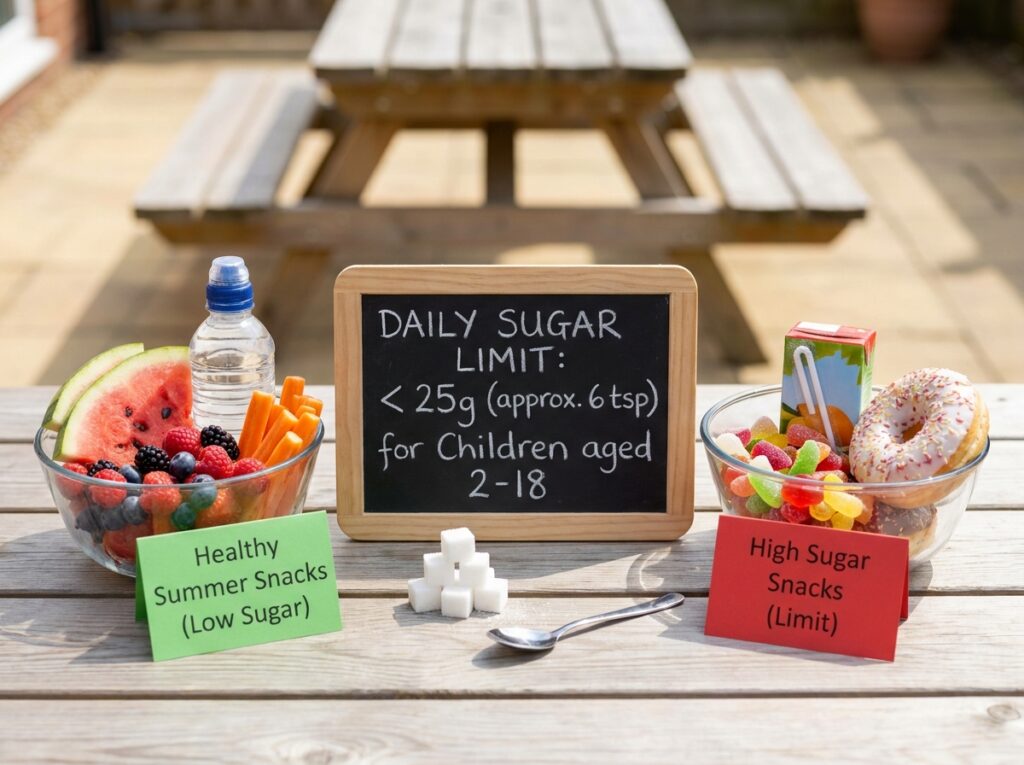
According to the American Heart Association (2023), children aged 2-18 should consume less than 25 grams (6 teaspoons) of added sugar daily. The World Health Organization recommends limiting free sugars to less than 10% of total energy intake, with additional benefits occurring below 5%. For children under 2 years, the American Academy of Pediatrics advises zero added sugars.
The Centers for Disease Control and Prevention (2024) reports that children ages 2-19 consume an average of 17 teaspoons of added sugar daily, nearly triple the recommended amount. This excess sugar increases cavity risk by creating an acidic oral environment for 20-40 minutes after each consumption, allowing cavity-causing bacteria to thrive.
Step 1: Calculate Your Child’s Current Sugar Intake
Begin with a 3-day food diary to establish baseline consumption patterns. Record every food and beverage your child consumes, including portion sizes.
Sub-Step 1A: Record All Foods and Drinks
Document meals, snacks, and beverages for three consecutive days, including one weekend day. Photograph portions for visual reference. Note the time of consumption to identify eating patterns.
Sub-Step 1B: Calculate Total Added Sugars
Read nutrition labels for “Added Sugars” listed in grams. Divide total grams by 4 to convert to teaspoons (4 grams equals 1 teaspoon). Sum daily totals and average across three days. For example, if your child consumed 45 grams on Day 1, 52 grams on Day 2, and 38 grams on Day 3, the average is 45 grams (11.25 teaspoons) daily.
Step 2: Identify Hidden Sugar Sources in Summer Snacks
Many seemingly healthy summer snacks contain excessive added sugars that damage tooth enamel through prolonged acid exposure.
High-Risk Summer Snacks to Limit:
- Fruit juice boxes: 20-25 grams per 8-ounce serving (equals 5-6 teaspoons)
- Flavored yogurt tubes: 12-19 grams per tube (3-5 teaspoons)
- Granola bars: 8-14 grams per bar (2-3.5 teaspoons)
- Sports drinks: 21 grams per 12-ounce bottle (5.25 teaspoons)
- Popsicles (commercial): 10-15 grams per popsicle (2.5-4 teaspoons)
- Dried fruit with added sugar: 18-24 grams per 1/4 cup (4.5-6 teaspoons)
According to the Journal of the American Dental Association (2024), sticky sugary foods that cling to teeth for extended periods cause 60% more enamel demineralization than quickly consumed sugars.
Step 3: Replace High-Sugar Snacks with Tooth-Friendly Alternatives
Implement strategic substitutions that satisfy summer snack cravings while protecting dental health. When selecting tooth-friendly snacks for kids, prioritize options that require chewing, stimulate saliva production, and contain minimal added sugars.
Summer Snack Replacement Chart:
| Instead Of | Choose This | Sugar Savings |
|---|---|---|
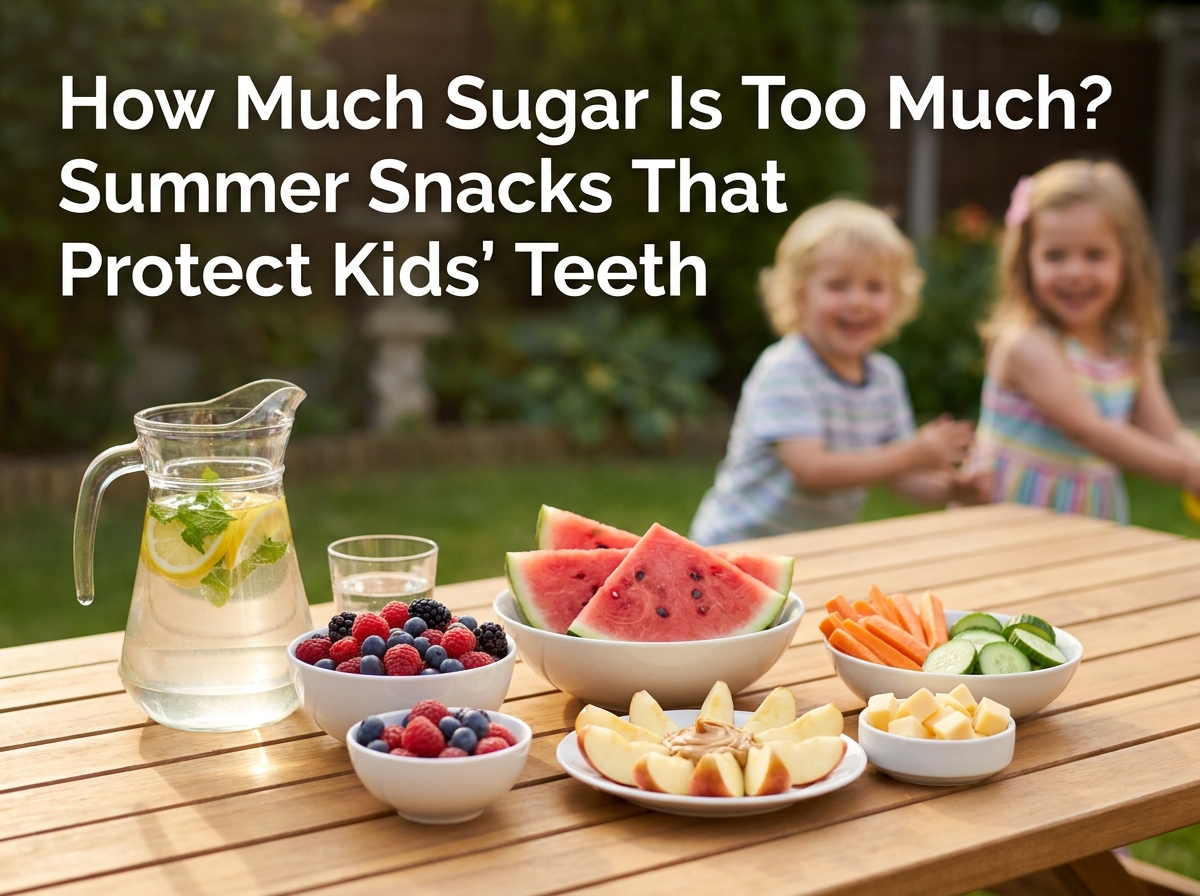
| Fruit juice box (8 oz) | Watermelon slices (1 cup) + water | Reduces sugar by 15 grams |
| Flavored yogurt tube | Plain Greek yogurt + fresh berries (1/4 cup) | Reduces sugar by 10-14 grams |
| Granola bar | Cheese cubes (1 oz) + apple slices | Reduces sugar by 8 grams |
| Sports drink | Coconut water (unsweetened) or water with lemon | Reduces sugar by 18-21 grams |
| Commercial popsicle | Frozen fruit kabobs (strawberries, grapes) | Reduces sugar by 8-12 grams |
Additional Tooth-Protective Summer Snacks:
- Crunchy vegetables: Carrots, celery, cucumber sticks stimulate saliva production that neutralizes acids
- Cheese and whole-grain crackers: Cheese raises oral pH levels and provides calcium
- Hard-boiled eggs: Protein-rich, zero sugar, phosphorus supports tooth remineralization
- Raw almonds (age 4+): Stimulate saliva, low sugar, provide vitamin E
- Hummus with bell pepper strips: Savory alternative with less than 1 gram sugar per serving
Step 4: Implement Portion Control Strategies
Even natural sugars from fruit require portion management to prevent excessive acid exposure on tooth enamel.
Sub-Step 4A: Use Visual Portion Guides
Serve fruit portions equivalent to your child’s fist size (approximately 1/2 to 1 cup depending on age). For treats containing added sugar, limit to 2 tablespoons or one small cookie (10-15 grams total sugar).
Sub-Step 4B: Pre-Portion Snacks Weekly
Dedicate 30 minutes on Sunday to pre-portion snacks into individual containers. This prevents overconsumption and creates grab-and-go convenience. Label containers with contents and sugar content for older children to build awareness.
Step 5: Establish Strategic Eating Schedules
The American Dental Association (2024) emphasizes that eating frequency matters as much as sugar quantity. Each eating occasion triggers a 20-40 minute acid attack on tooth enamel.
Sub-Step 5A: Create Structured Meal Times
Limit eating occasions to three meals plus two planned snacks daily. For example: breakfast at 7:30 AM, morning snack at 10:00 AM, lunch at 12:30 PM, afternoon snack at 3:00 PM, dinner at 6:00 PM. This schedule allows teeth 2-3 hours of recovery between acid attacks.
Sub-Step 5B: Pair Sugary Foods with Meals
If serving dessert or treats, offer them immediately after meals rather than as standalone snacks. Increased saliva production during meals helps neutralize acids and wash away food particles.
Sub-Step 5C: Rinse with Water After Snacking
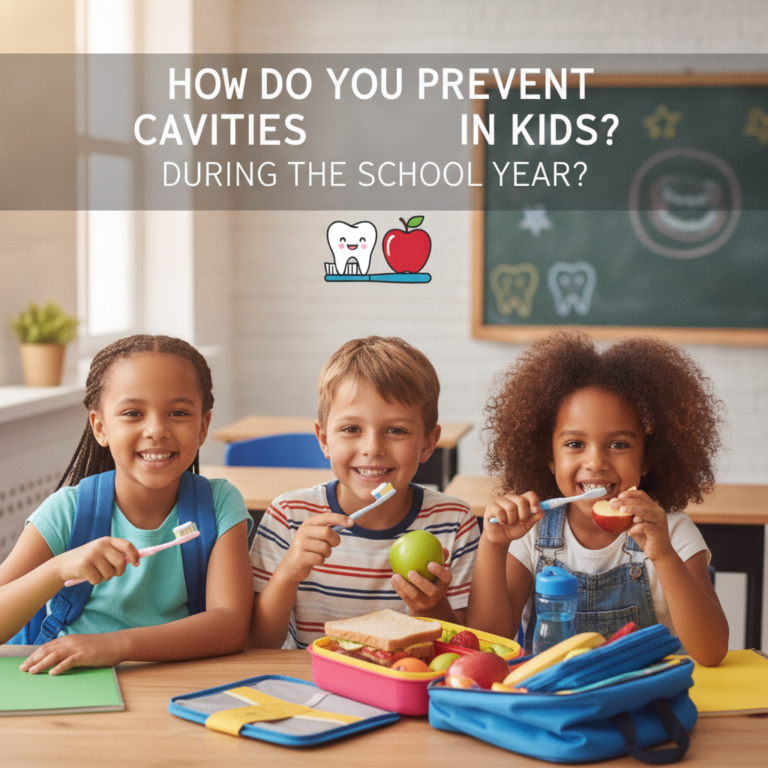
Have children swish with plain water for 30 seconds after consuming any snack. Wait 30-60 minutes before brushing to avoid brushing softened enamel. According to the International Journal of Dental Hygiene (2023), water rinsing removes 30% of residual sugars immediately.
Troubleshooting Common Challenges
If your child resists new snacks: Implement the “15-exposure rule.” Research shows children require 15-20 exposures to new foods before acceptance. Serve rejected snacks alongside familiar favorites without pressure.
If sugar intake plateaus above 25 grams: Audit beverages first, as 47% of children’s added sugar comes from drinks (CDC, 2024). Replace one sugary beverage daily with water or milk.
If children request treats at playdates: Send preferred healthy snacks with your child. Communicate dietary preferences to host parents in advance. Allow occasional treats (1-2 times weekly) to prevent restriction backlash.
If your child experiences dental anxiety about checkups: Understanding proper nutrition helps, but regular dental visits remain essential. Learn strategies from resources about helping children overcome dental anxiety to ensure consistent preventive care.
If budgets limit fresh fruit access: Frozen fruit contains identical nutrition without added sugars (verify labels). Frozen options cost 30-50% less than fresh and last 8-12 months, making them economical for year-round use.
Measuring Success
Track progress using these objective metrics:
- Average daily sugar intake decreases by 10-15 grams within 4 weeks
- Children consume 3-5 servings of vegetables and fruit daily
- Eating occasions limited to 5 times daily (3 meals + 2 snacks)
- Zero cavities at 6-month dental checkup
- Children independently choose tooth-friendly snacks 70% of the time by Week 8
Next Steps for Long-Term Dental Health
After implementing this 8-week foundation, maintain results with these advanced strategies:
- Schedule bi-annual dental cleanings: Professional cleanings remove plaque buildup despite excellent home care
- Teach proper brushing technique: Children should brush twice daily for 2 minutes using fluoride toothpaste (pea-sized amount ages 3+)
- Introduce daily flossing by age 6: Floss when teeth touch to prevent interproximal cavities
- Consider dental sealants: Sealants reduce cavity risk in permanent molars by 80% (CDC, 2024)
- Model healthy habits: Parents who limit sugar and maintain dental routines raise children with 65% fewer cavities
- Read labels habitually: Teach children to identify added sugars on nutrition labels as life skills
By following this systematic approach, parents create sustainable eating patterns that protect developing teeth while allowing children to enjoy summer activities. Consistency over perfection produces the best outcomes—small daily improvements compound into significant cavity risk reduction over months and years.