What Is a Child’s First Dental Cleaning? A Complete Guide for Parents
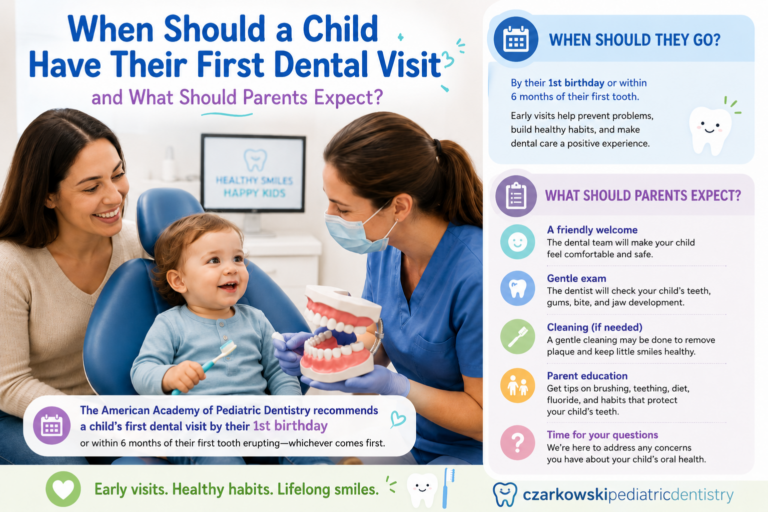
A child’s first dental cleaning is a short, gentle preventive visit where a pediatric dentist checks a baby’s or toddler’s teeth and gums, cleans off plaque, and usually applies fluoride varnish. The American Academy of Pediatric Dentistry (AAPD) recommends this visit by age 1 or within six months of the first tooth coming in.
The appointment usually takes 30–45 minutes or less. It focuses on preventing cavities and teaching parents how to care for their child’s teeth at home, not on deep cleaning.
Why Does a Child’s First Dental Visit Matter?
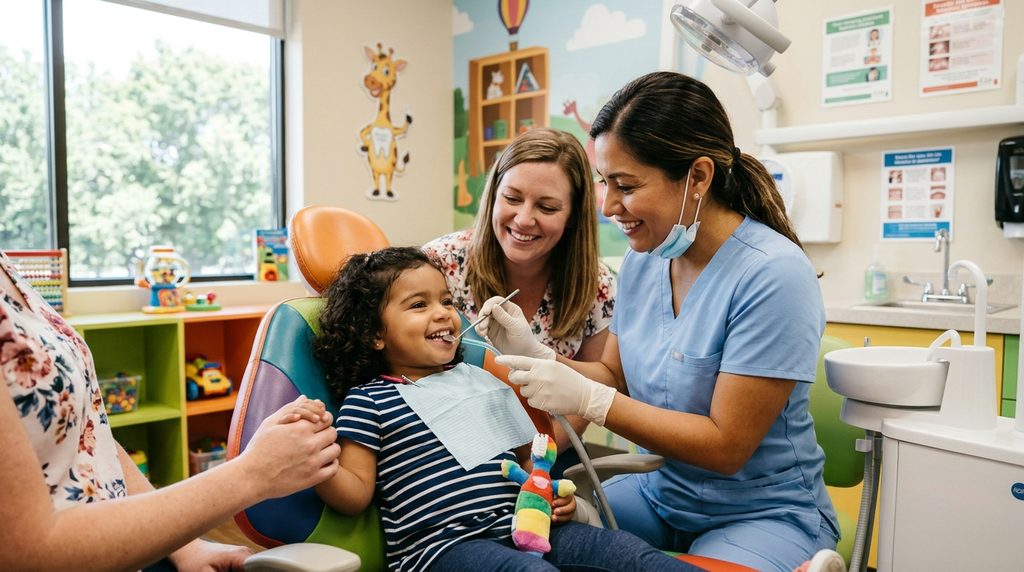
The first visit catches problems early and sets up a routine of regular checkups. According to the CDC, tooth decay is one of the most common chronic conditions in childhood, and it can start as soon as the first tooth appears.
Starting early also helps children get comfortable with the dental chair, the sights and sounds of the office, and the dentist, which can reduce dental anxiety as they grow.
What the Dentist Checks at the First Visit
- How baby teeth are coming in
- Early signs of tooth decay, such as white spots on the teeth
- Gum color and texture, including signs of inflammation
- Bite and jaw development
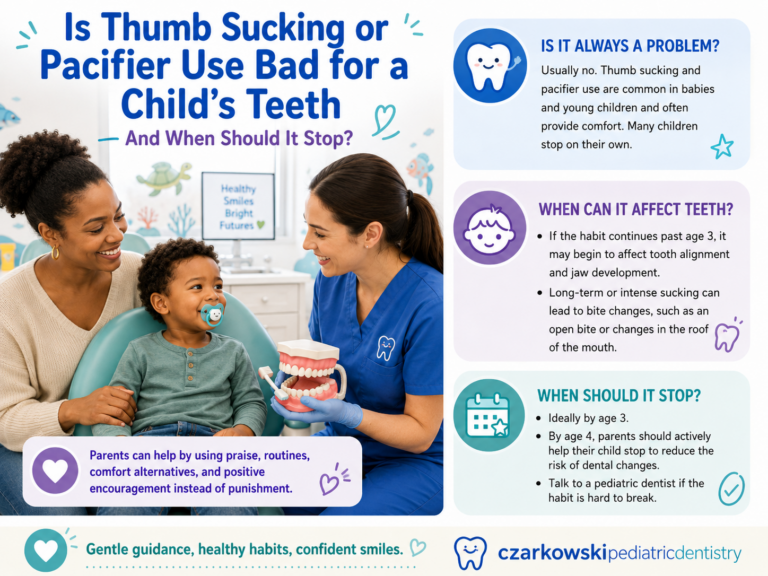
- Teething, feeding, and habits like thumb-sucking or pacifier use
How Is a Child’s First Dental Cleaning Different From an Adult Cleaning?
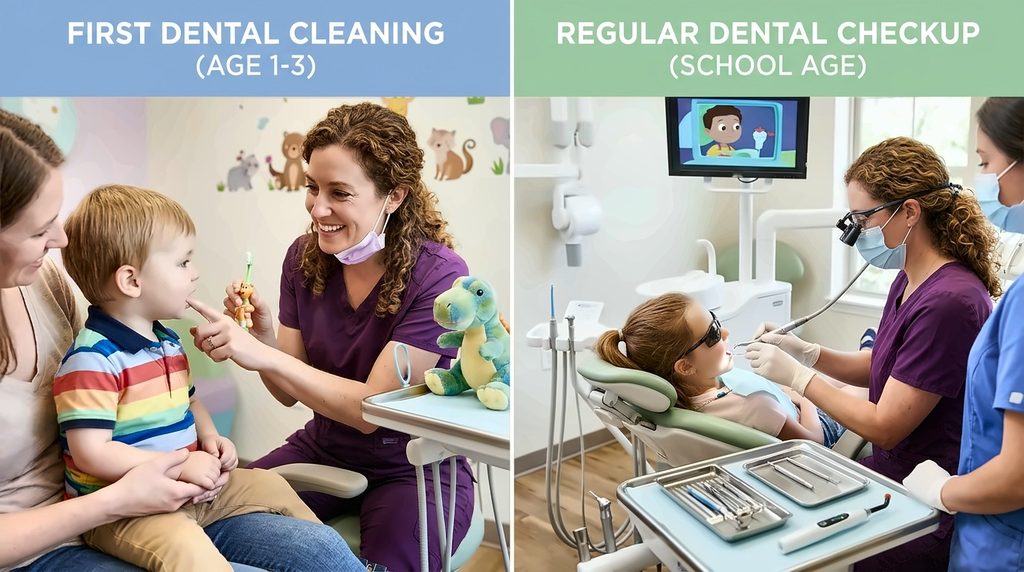
It’s shorter, gentler, and more focused on prevention and parent education.
- Short: Most visits last 45 minutes or less to keep children comfortable.
- Gentle tools: The dentist uses a small mirror and gentle instruments, not scaling tools.
- Parent involvement: Parents often hold the child on their lap or sit nearby during the exam.
- Prevention first: The goal is to prevent cavities, not treat them.
- Hands-on teaching: The dentist shows parents how to brush their child’s teeth at home.
What Happens During a Child’s First Dental Cleaning?
The visit usually follows five steps: a health history review, a gentle exam, a cleaning, fluoride varnish, and a talk with parents about home care.
Step 1: Health and Dental History
The dentist asks about feeding habits, bottle or sippy cup use, teething, and any family history of tooth decay.
Step 2: Gentle Oral Exam
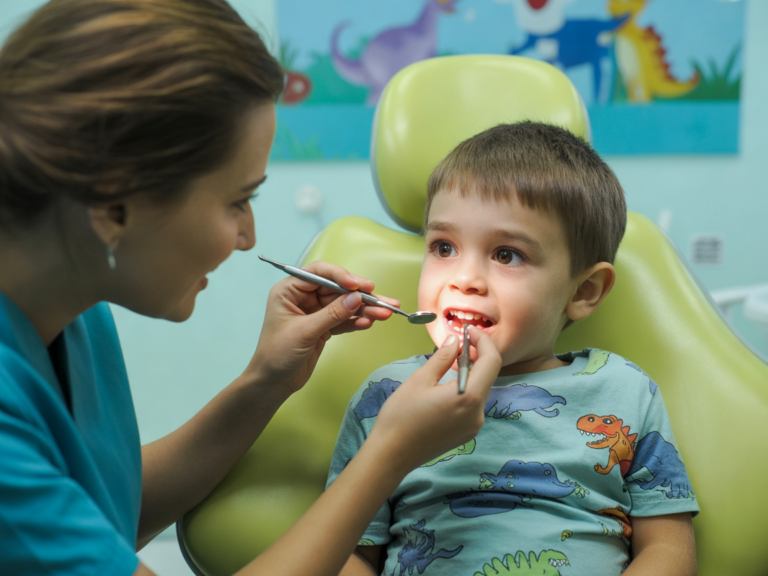
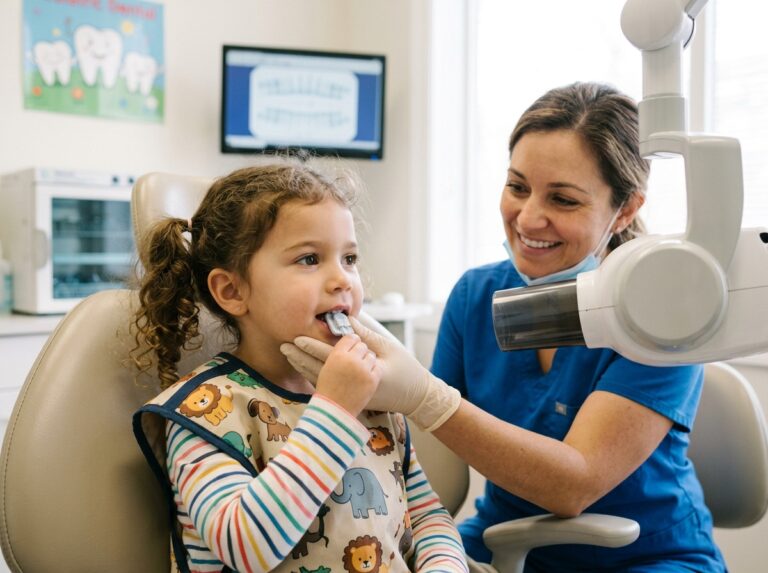
Using a small mirror, the dentist checks each tooth for signs of decay, looks at the gums, and counts the teeth that have come in. For babies, this is often done “knee to knee,” with the child lying back on the parent’s lap.
Step 3: Teeth Cleaning
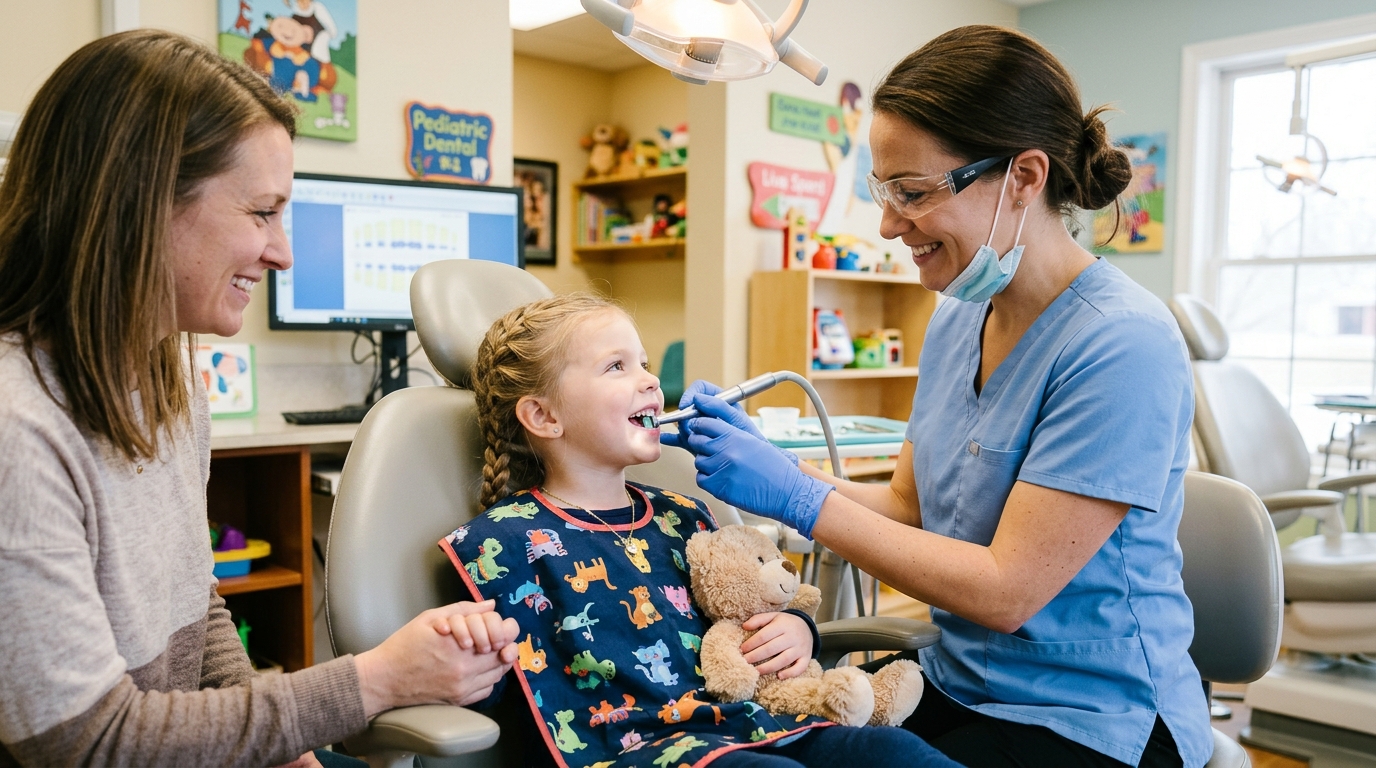
The dentist or hygienist uses a soft brush and a gentle polishing paste to remove plaque from the teeth.
Step 4: Fluoride Varnish
A thin coat of fluoride varnish is painted onto the teeth to strengthen enamel and help prevent cavities. The AAPD supports fluoride varnish as soon as the first tooth appears.
Step 5: Parent Education
The dentist reviews brushing, toothbrush and toothpaste choices, diet and snacking, and when to come back.
Parents scheduling a child first dental cleaning Indianapolis practices offer can expect this same gentle, structured visit.
What comes at later visits? Dental x-rays usually aren’t needed at the first visit. They’re typically added later, often around age 3–5, only if the dentist needs to check between the back teeth. Dental sealants are usually placed on permanent molars when they come in, around age 6.
Common Myths About a Child’s First Dental Cleaning
| Myth | Reality |
|---|---|
| Baby teeth don’t matter because they fall out. | Baby teeth help children chew and speak, and they hold space for permanent teeth. Decay in baby teeth can cause pain and infection. |
| The first cleaning hurts. | It’s gentle and non-invasive. Dentists use a soft brush and polishing paste, not drills. |
| Kids should wait until age 3 to see a dentist. | The AAPD recommends the first visit by age 1 or within 6 months of the first tooth. |
| Fluoride is only for older kids. | Fluoride varnish can be applied as soon as the first tooth appears. |
| Crying means something is wrong. | Crying is a normal toddler reaction to a new place and doesn’t mean the child is in pain. |
How Is the First Visit Different From Later Checkups?
The first visit is mainly an exam and a baseline. Later checkups build on it, usually every 6 months, with a fuller cleaning and, as the child grows, x-rays or sealants when needed.
At each checkup, the dentist compares the child’s teeth to earlier visits to track decay risk, tooth development, and jaw growth. How often your child needs to come back can change based on their cavity risk and home care habits.
How Do You Prepare a Child for Their First Dental Visit?
Book the visit at a time of day when your child is rested and fed, talk about it positively, and bring a comfort item.
Before the Visit
- Schedule it for your child’s best time of day, such as after a nap.
- Read picture books about going to the dentist.
- Use positive words, and avoid words like “hurt” or “shot.”
- Practice “opening wide” at home and pretend to count teeth.
What to Bring
- Insurance card and ID (check your child’s dental coverage beforehand)
- A list of medications and allergies
- Any previous dental records
- A favorite toy, blanket, or toothbrush from home
Choosing a Pediatric Dentist
Look for a dentist who specializes in children, has a kid-friendly office, and offers appointment times that work for toddlers. Reviews from other parents can show how well the practice handles nervous kids.
Questions to Ask at the First Visit
- What toothbrush and toothpaste should we use at this age?
- How much toothpaste should I use?
- When should we think about sealants?
- How can we manage teething and brushing together?
- What early signs of tooth decay should I watch for?
Frequently Asked Questions
When should a child have their first dental visit?
The American Academy of Pediatric Dentistry recommends the first dental visit by a child’s first birthday or within six months of the first tooth coming in, whichever comes first.
Is a child’s first dental cleaning painful?
No. The first cleaning is gentle and non-invasive. The dentist uses a soft brush, polishing paste, and fluoride varnish, with no drills or needles. Most children feel little more than a tickle, though some cry because the setting is new.
How long does a child’s first dental cleaning take?
Most first visits take 30–45 minutes or less, including the exam, cleaning, fluoride varnish, and time to answer parents’ questions. Visits for babies are often on the shorter side.
What happens if my child cries at the dentist?
Crying is normal and doesn’t mean your child is in pain. Pediatric dentists are trained to work calmly with crying toddlers, and the exam can usually continue. Many babies are examined on the parent’s lap, which helps them feel secure.
How much toothpaste should a baby or toddler use?
For children under 3, use a smear of fluoride toothpaste about the size of a grain of rice. For ages 3–6, use a pea-sized amount. Brush twice a day, and help your child brush until they can do it well on their own.
How often should children see the dentist after the first visit?
Most children should have a checkup every 6 months. Your dentist may recommend more frequent visits if your child has a higher risk of cavities.
The Bottom Line
A child’s first dental cleaning is a gentle, preventive visit that should happen by age 1. It checks early tooth development, adds fluoride protection, and teaches parents how to care for their child’s teeth at home. Starting early lowers the risk of cavities and helps children feel comfortable with the dentist for years to come.